

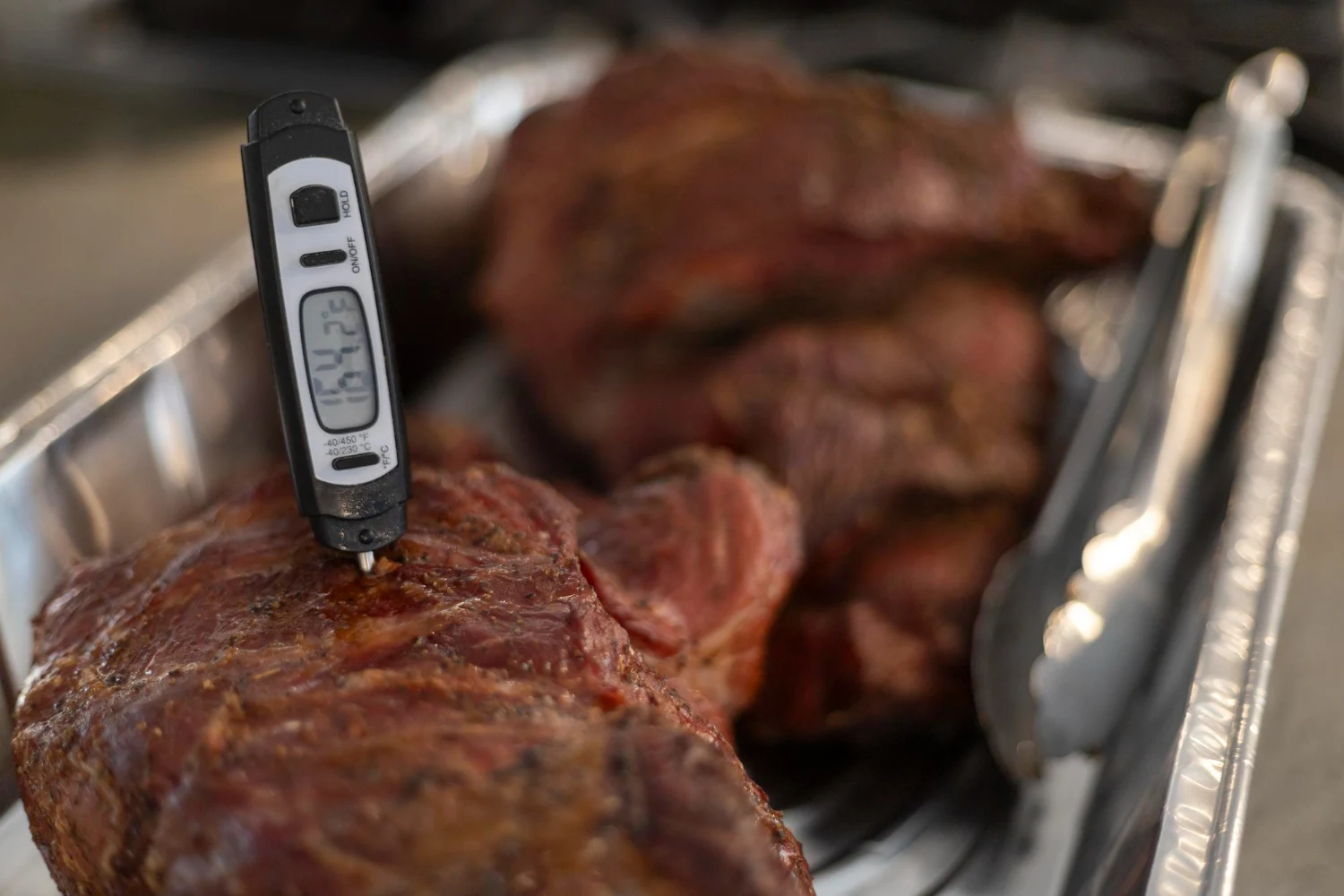
The difference between a great cook and a ruined one often comes down to a few degrees. Undercook a chicken by 10 degrees and you have a food safety problem. Overcook a brisket past 210 degrees and you’re serving sawdust. A reliable wireless meat thermometer removes the guesswork, and in 2026 the technology has reached a point where even mid-range options are genuinely impressive.
But the market is crowded with probes that look nearly identical and perform very differently. This guide covers what separates a great wireless thermometer from a frustrating one, which formats suit which cooking styles, and what to look for if you’re buying for smoking, grilling, or oven roasting.
Why Your Cooking Thermometer Matters More Than You Think
The USDA is specific about safe internal temperatures: 165°F for poultry, 145°F for whole cuts of beef and pork (with a 3-minute rest), and 160°F for ground meats. These aren’t suggestions. Foodborne illness from undercooked meat sends over 48 million Americans to the doctor or home sick every year, according to the Centers for Disease Control and Prevention.
But temperature also determines quality on the other side. A medium-rare steak hits its sweet spot around 130 to 135°F. A smoked pork shoulder collapses beautifully when the internal temperature stalls, climbs through what pitmasters call ‘the stall,’ and reaches around 200 to 205°F. Miss either target by more than a few degrees, and the result is objectively worse. A leave-in wireless thermometer lets you monitor this in real time without opening the grill or oven, which drops temperature and extends cook time.
Bluetooth vs. WiFi: Which Connection Type Is Right for You?
This is where most buyers get confused. Bluetooth and WiFi meat thermometers both send temperature data to your phone. The difference is range and infrastructure.
A Bluetooth meat thermometer connects directly to your phone. Range is typically 30 to 100 feet in open air, less through walls. That’s fine for most backyard grilling. If you walk inside while your ribs are on the patio grill, your connection drops, and the app stops updating. Some models use a dedicated receiver unit that sits near the grill and extends that range, with the receiver connecting to your phone via Bluetooth from a shorter distance.
A WiFi meat thermometer routes through your home network. As long as you’re on the same network, or even remotely via the app, you get live readings from anywhere. That’s the real appeal for long cooks: a 14-hour overnight brisket smoke where you want to check progress from your bedroom at 3am without walking outside.
Most dedicated smoker users end up preferring WiFi or a hybrid system. For casual grilling where you stay close to the grill anyway, Bluetooth is simpler and doesn’t require network setup.
What Does Accuracy Actually Mean for a Meat Thermometer?
Most quality wireless meat thermometers land within plus or minus 1 to 2 degrees Fahrenheit. Premium models certified to NIST (National Institute of Standards and Technology) standards promise accuracy within plus or minus 0.5 degrees. That half-degree matters when you’re targeting a precise internal temperature for a rare steak at exactly 130°F.
For smoking long and low, where you’re pulling a pork shoulder at 200 to 205°F and a degree or two is inconsequential to the finished texture, budget Bluetooth probes are perfectly adequate. The precision question matters most for high-stakes cooks where doneness is defined in a tight temperature window: beef tenderloin, delicate fish, or any protein where going 5 degrees past the target crosses a line from excellent to disappointing.
Probe placement also affects accuracy meaningfully. Even a perfectly calibrated probe gives wrong readings if it’s sitting too close to a bone or the grill grate surface. The thermal center of a thick piece of meat is always the coldest point. Inserting the probe horizontally through the thickest part, away from bone, gives the most representative reading.
Single Probe vs. Multi-Probe: Which Setup Do You Need?
Single-probe systems are simpler and usually cheaper. They track one piece of meat. If you’re cooking a single roast or one steak, that’s all you need.
Multi-probe systems let you monitor multiple meats simultaneously, or track both the internal temperature of the meat and the ambient temperature of the grill. That second data point, ambient probe at grate level, is surprisingly useful. You may set your smoker to 225°F but discover it’s running at 250°F at grate level. That discrepancy explains why your cook finishes faster than expected, and adjusting from there saves you from overcooking.
For serious BBQ or anyone cooking multiple different proteins at a party, a four-probe or six-probe system pays for itself in convenience. ThermoPro and MEATER both offer multi-probe options. ThermoPro’s wired multi-probe systems are popular for smokers; MEATER’s true wireless probes are the choice when you want no cables at all.
Does the App Make or Break the Experience?
Absolutely. And this is where wireless meat thermometers diverge dramatically from each other despite similar hardware specs.
A good app shows real-time temperature graphs, lets you set custom alerts at specific temperatures, includes USDA preset temperatures for common meats, and estimates finish time based on current trajectory. The estimated finish time feature alone is worth a premium, because telling your guests dinner will be ready in 90 minutes versus guessing is a fundamentally different hosting experience.
MEATER’s app is consistently praised for being intuitive and polished. Combustion Inc’s app goes further with a ‘SafeCook’ feature that tracks both temperature and time to verify food safety based on USDA guidelines, not just peak temperature. ThermoPro apps are functional but more utilitarian. If app experience matters to you, this is worth researching through recent reviews, as apps update frequently and opinions can shift quickly.
For other smart cooking tools that integrate with your kitchen setup, see our smart kitchen appliances guide for a broader look at connected cooking gear.
Best Wireless Meat Thermometer for Smoking
Smoking is where wireless thermometers earn their keep most clearly. A 12 to 18-hour pork shoulder or brisket simply cannot be monitored effectively by checking the thermometer every 30 minutes. You need continuous monitoring, solid battery life, and reliable connectivity through the night.
For smoking specifically, battery life becomes a critical spec. Budget Bluetooth probes typically offer 24 to 40 hours per charge, which covers most long smokes. WiFi base stations often need to stay plugged in, while the probe itself runs on battery. Always check probe battery life separately from any receiver or base station, because a probe that dies at hour 10 of a 14-hour cook is a serious and avoidable problem.
MEATER Pro and Combustion Inc Predictive Thermometer are the two names that consistently appear at the top of serious BBQ enthusiasts’ lists for smoking. Both are true wireless (no cables running from probe to receiver), both have strong app ecosystems, and both can handle the ambient temperatures inside a smoker without damage. Combustion’s seven-sensor probe, which identifies the true thermal center of the meat regardless of insertion angle, is a genuinely innovative piece of engineering.
Best Wireless Meat Thermometer for Grilling
Grilling runs hotter and faster than smoking. Ambient temperatures on a direct flame can spike past 700°F, which destroys probes not rated for high heat. This is the first spec to check for a grill thermometer: what is the maximum ambient temperature the probe can withstand?
Most standard probes handle up to 450 to 500°F ambient. Probes rated to 700°F or above, like MEATER Pro with its 1,000°F ambient rating, give you far more flexibility for searing and high-heat grilling without worrying about equipment damage.
For casual grilling, a dual-probe system, one probe in the meat, one monitoring grill temperature, from a brand like ThermoPro or Weber Connect gives you most of what you need at a reasonable price. Weber Connect, in particular, integrates well with Weber grills and includes guided cooking prompts in the app, which is useful for less experienced grillers.
If you’re building out a smart outdoor cooking setup, our ChatGPT meal planning guide can help you integrate AI tools for recipe timing and planning around your cook schedule.
Frequently Asked Questions
How do I calibrate a wireless meat thermometer?
Most wireless thermometers are factory-calibrated and don’t require user calibration. You can verify accuracy using the ice water method: fill a glass with ice and water, let it stabilize for a minute, and check that your probe reads 32°F (0°C). If it’s off by more than 2 degrees, the thermometer may need recalibration via the app (if supported) or replacement. Some premium models include self-calibration features in the app. Checking accuracy before a big cook takes 2 minutes and can save an expensive cut of meat.
Can I leave a wireless meat thermometer in the oven?
Yes, for probes specifically rated for oven use. Most leave-in wireless probes are designed to stay in the meat throughout the entire cook, whether in the oven, smoker, or on the grill. The key is checking the maximum temperature rating and ensuring it fits your cooking method. A probe rated to 450°F ambient is fine for most oven roasting but shouldn’t be used in a broiler or very high-heat setting. Always check the manufacturer’s specs before using a probe at extreme temperatures.
How many probes do I actually need?
For most home cooks, two probes cover the majority of situations: one in the meat, one monitoring ambient grill or oven temperature. If you regularly cook multiple different proteins at the same time, or host large gatherings with a diverse spread on the grill, four probes become genuinely useful. Beyond four probes, the marginal benefit drops sharply for home use. Professional caterers and competition BBQ teams are the primary users of six-probe or eight-probe systems, where tracking multiple briskets, ribs, and shoulders simultaneously is a real operational need.
What’s the best wireless meat thermometer under $50?
At the sub-$50 price point, ThermoPro TP20 remains one of the most consistently recommended options. It’s dual-probe, accurate to within plus or minus 1.8 degrees Fahrenheit, and has a receiver that extends Bluetooth range compared to app-only models. It doesn’t have a polished app experience, and there’s no WiFi connectivity, but for basic monitoring of two probes with reliable alerts, it performs well above its price class. MeatStick’s entry-level model is another option in this range for those who want a true wireless probe without cables.
Where the Smart Thermometer Market Is Heading
Predictive cooking is the next frontier. Rather than simply reporting current temperature, the most advanced wireless thermometers now forecast finish time, flag anomalies in the cook, and suggest adjustments to heat settings. Combustion Inc’s predictive algorithms already do this to a meaningful degree, and MEATER has been expanding its estimated time feature with every app update.
Integration with smart kitchen ecosystems is also expanding. Some thermometers now work with Alexa and Google Assistant voice commands, letting you ask for a temperature reading without picking up your phone. As smart home adoption grows, expect tighter integration between thermometers, smart ovens, and home assistants.
For a broader look at the connected kitchen, our robot vacuum and smart kitchen guide covers how multiple smart appliances can work together in a modern home setup.
The practical upshot: buying a wireless meat thermometer today is a better decision than it was three years ago. The technology has matured, prices have come down, and the apps have gotten genuinely good. The gap between a $50 entry-level option and a $200 premium probe is narrower than it’s ever been. For most home cooks, a mid-range two-probe system from a reputable brand will deliver more consistent results than any guesswork method, no matter how experienced you think you are.