

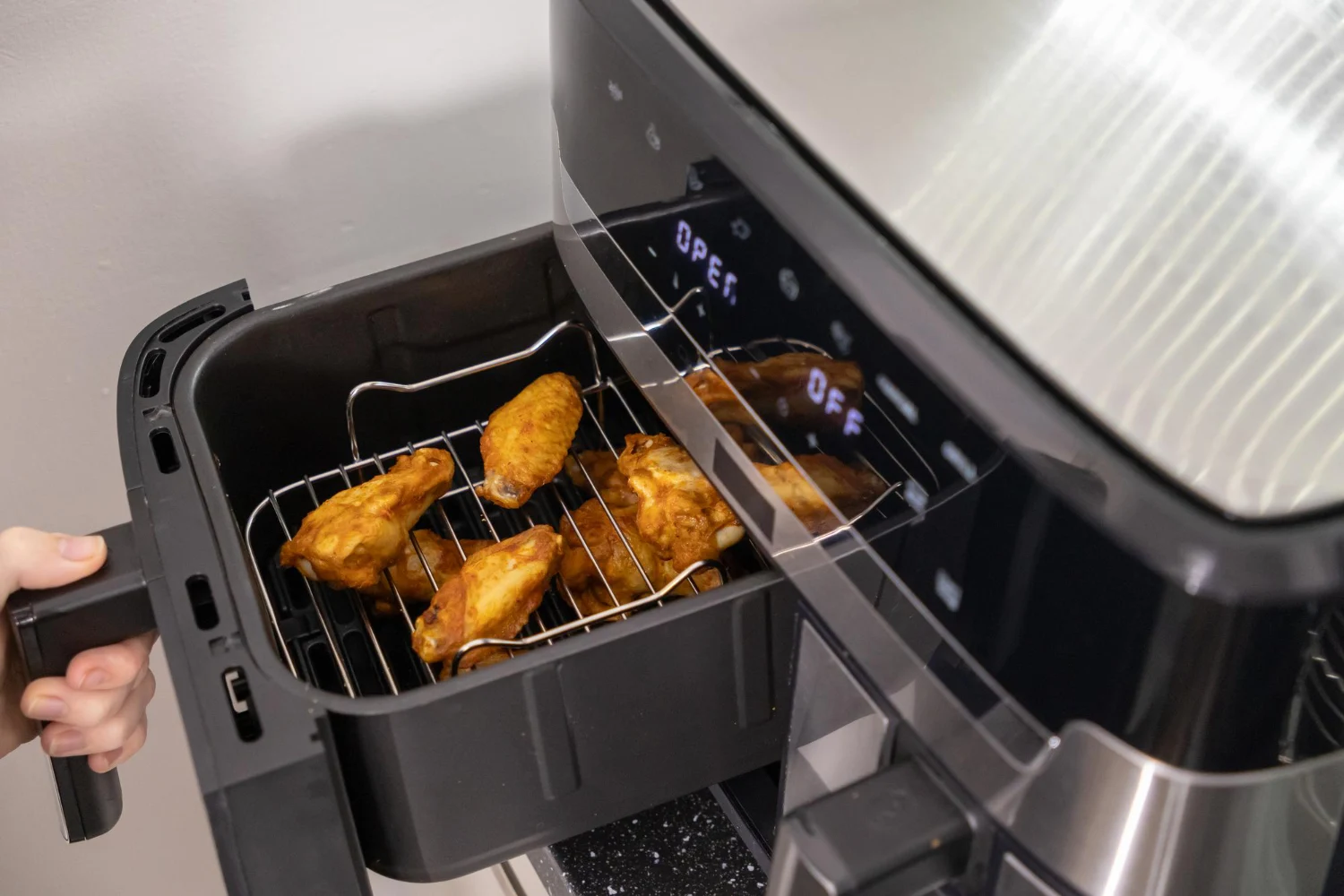
Air fryers took the kitchen world by storm, and they haven’t slowed down. The global air fryer market hit around $1.4 billion in 2024 and is on track to nearly double by the early 2030s, driven by a very simple promise: crispier food, less oil, less guilt. But the market has also been flooded with look-alike appliances that range from genuinely great to borderline useless. Knowing which air fryer is actually worth your counter space takes more than reading a product description.
This guide cuts through the clutter. Whether you’re hunting for the best air fryer for beginners, want a high-end air fryer with serious capacity, or need something compact for a small apartment kitchen, there’s a right pick for your situation. And a lot of wrong ones to avoid.
Why So Many Air Fryers Feel the Same (But Aren’t)
Here’s the thing most buying guides won’t tell you: nearly all air fryers use the same basic technology. A heating element sits above a powerful fan. Hot air circulates at high speed around the food. The result is a Maillard reaction, that brown, crispy crust, without submerging food in oil.
So why do results vary so dramatically? It comes down to airflow design, heating element quality, and basket geometry. A poorly designed air fryer creates hot spots. One side of your food scorches while the other stays pale. The fan runs too loud, or the temperature control drifts badly, cooking your fries at 380°F when you set it to 400°F.
Premium models also tend to use PFAS-free nonstick coatings, a meaningful difference as regulators and consumers increasingly scrutinize traditional nonstick materials. If you’re spending on a high-end air fryer, that’s one feature worth confirming before you buy.
What Size Air Fryer Do You Actually Need?
Size gets underestimated all the time. A 2-quart air fryer can handle a single serving of fries or a couple of chicken wings. That’s about it. If you’re cooking for two people regularly, you’ll want at least 4 quarts. For families or anyone who likes batch cooking, 6 to 7 quarts becomes the practical minimum.
The best air fryer for vegetables often benefits from extra basket space, because overcrowding is the enemy of crispiness. When vegetables are piled on top of each other, they steam rather than roast. A larger basket lets you spread things in a single layer, which is where the magic happens.
Basket-style air fryers are the most common format. You pull out a drawer, add food, slide it back in. Simple. But air fryer ovens, which look like a small toaster oven with multiple racks, offer more versatility. You can dehydrate, toast, and rotisserie, not just air fry. The trade-off is a larger footprint and slightly more cleanup.
Does Wattage Matter for Air Fryer Performance?
Yes, but not in the way most people think. Higher wattage, typically 1,500 to 1,800 watts for full-size models, means faster preheat and more stable cooking temperatures under load. A 1,000-watt unit will technically cook food, but it struggles when you open the basket mid-cook and cold air rushes in. Recovery time is longer, and results are less consistent.
That said, wattage is not a proxy for quality. Some well-reviewed, top-rated air fryers run at 1,500 watts and outperform 1,800-watt competitors because the heating and airflow system is better engineered. Wattage sets the ceiling; design determines how close you get to it.
Which Air Fryer Brand Is Actually Best?
Cosori, Ninja, Philips, and Instant Pot dominate the mainstream market for good reason. Each takes a different approach.
Philips invented the modern air fryer back in 2010, and their machines still lead on build quality and cooking consistency. Their TurboStar and Twin TurboStar technology circulates air in a star-shaped pattern, which reduces hot spots more effectively than simple top-down circulation. The downside is price. Philips air fryers sit at the top of the range, and you pay for it.
Ninja has built a loyal following with its dual-basket models. The Ninja DualZone lets you cook two different foods at two different temperatures simultaneously, with a sync function that finishes both at the same time. For households with picky eaters or different dietary preferences, that’s a genuinely useful feature rather than a marketing gimmick.
Cosori strikes the best value balance in the mid-range. Their smart air fryers connect to an app with preset recipes and scheduling. For beginners who want guidance beyond trial and error, the app integration removes some of the guesswork around time and temperature.
Instant Pot’s Vortex line carries over that brand’s reputation for multi-functionality. Their air fryer ovens in particular, with 6-in-1 or even 7-in-1 cooking modes, appeal to anyone who wants a single appliance doing the work of several.
What Makes the Best Air Fryer for Fries?
Perfectly crispy fries in an air fryer require three things: dry potatoes, the right temperature, and enough basket space.
Dry potatoes matter more than people realize. Excess moisture on the surface of a sliced potato will steam before it can crisp, which gives you a soft, slightly rubbery texture rather than a crunchy one. Pat your cut fries dry with a paper towel, toss lightly in oil (about a teaspoon per serving), and season before cooking.
Temperature-wise, 400°F is the sweet spot for most fries. Models with accurate, stable temperature control, tested within a few degrees of their setting, produce noticeably better results than those with imprecise controls. This is where air fryer ratings from independent tests, rather than brand claims, become useful.
For air fryer reviews on fries specifically, the Cosori 6.8-quart and Ninja 4-quart basket models consistently rank at the top for texture and evenness. The larger Cosori basket allows a single layer for a bigger batch. The Ninja’s smaller footprint is better for one to two servings at a time.
Is a Quiet Air Fryer Actually Possible?
Noise is an underrated purchasing criterion. Air fryers are louder than a conventional oven but quieter than a range hood. Most run between 55 and 65 decibels, which is roughly the volume of a normal conversation.
The quietest models on the market tend to be those with slower, larger fans rather than small, high-speed fans that have to work harder. Philips and some Instant Pot models have earned consistent praise for relatively low operating noise. If you live in a small apartment, cook late at night, or simply find constant fan noise irritating, it’s worth checking decibel ratings in independent reviews before committing.
Best Air Fryer for College Students and Small Spaces
For a dorm room or small apartment, a 2 to 3-quart model does the job. The Cosori 2-quart and the Dash Compact are two popular choices at this end, both affordable and light enough to tuck into a cabinet.
College students benefit from presets. Models with one-touch settings for common foods, nuggets, fries, pizza, fish, remove the need to look up cooking times for every meal. That convenience adds up when you’re cooking between classes.
One thing worth knowing: some dormitories prohibit air fryers due to fire safety policies or wattage restrictions. Check your housing policy before purchasing. A 1,000-watt model may be more likely to comply than a 1,800-watt one, though policies vary widely.
For anyone setting up a full kitchen setup from scratch, see our guide to the best smoothie blenders for your smart kitchen for complementary appliances worth considering.
Air Fryer vs. Oven: When the Air Fryer Loses
Air fryers aren’t universally better than ovens. For large roasts, a whole chicken over 5 pounds, or baking a full sheet pan of cookies, a standard oven wins on capacity every time. Air fryers also struggle with anything very liquid-heavy: casseroles, stews, and dishes with runny sauces are awkward at best and messy disasters at worst.
Where air fryers genuinely outperform ovens is speed and convenience for small to medium portions. Reheating leftover pizza, for instance, takes about 3 minutes in an air fryer and restores the crust perfectly. The same result in an oven takes 10 to 15 minutes of preheating time alone.
If you’re cooking for one to two people most of the time, an air fryer can realistically replace most of your oven use. For larger households or avid bakers, it works best as a complement to a full-size oven, not a replacement.
Check out our breakdown of the best tower fans for the kitchen to keep your cooking space comfortable during those longer cooking sessions.
Frequently Asked Questions About Air Fryers
Do air fryers actually reduce calories compared to deep frying?
Yes, significantly. Deep frying submerges food in oil, which the food absorbs during cooking. A medium serving of deep-fried fries can carry 300 to 400 calories from oil alone. Air-fried fries, using a teaspoon of oil or none at all, contribute a fraction of that fat. The caloric reduction varies by food, but studies consistently show 70 to 80 percent less fat content in air-fried versus deep-fried equivalents. This is one of the main reasons air fryers caught on so fast with health-conscious households.
How often should you clean an air fryer?
After every use, ideally. The basket and any removable tray should be washed after each cooking session to prevent grease buildup from baking onto the surface. Most baskets are dishwasher-safe, which makes this easier. The exterior and the heating element area only need attention when you notice residue or smoke during cooking, which is a sign that grease has dripped into areas it shouldn’t reach. Neglecting cleaning is one of the most common causes of smoke, odd smells, and shorter appliance lifespan.
Can you cook frozen food directly from frozen in an air fryer?
Absolutely, and this is one of the air fryer’s strongest use cases. Frozen fries, nuggets, fish fillets, and similar items go straight from the freezer into the basket with no thawing required. Add a few minutes to the standard cooking time and give the basket a shake halfway through. Results are almost always superior to conventional oven heating: crispier exterior, more even heating, and far shorter total cook time. Some models include specific presets for frozen foods, which handle the temperature and timing automatically.
What’s the difference between a basket air fryer and an air fryer oven?
A basket air fryer uses a pull-out drawer with a perforated basket. It’s compact, easy to use, and excels at fries, wings, and similar items. An air fryer oven looks like a small countertop oven with a glass door and rack system. It offers more cooking modes and larger capacity but takes up significantly more counter space. The oven format is better for dehydrating, baking, and rotisserie cooking. Basket models are better when you want simplicity and fast results for everyday snacks and sides.
The Bigger Picture on Buying an Air Fryer in 2026
The air fryer category has matured considerably. Early models were expensive and inconsistent. Today you can find a reliable, well-reviewed model for under $80. The sweet spot for most households, a 5 to 7-quart basket model with a solid app or preset system, falls in the $80 to $150 range.
At the high end, models from Philips and premium Ninja lines push $200 to $250 and deliver measurably better results on cooking evenness, build quality, and longevity. If you cook daily and prioritize performance, the premium is justified. For occasional use or budget-conscious buyers, mid-range models from Cosori and Instant Pot offer very respectable performance.
Whatever you choose, the biggest gains come from using the appliance correctly: not overcrowding the basket, preheating when the recipe calls for it, and giving food enough space for air to circulate. Even a top-rated air fryer underperforms if it’s overloaded. That’s one truth no product review can change for you.
Other blogs
Fridge Freezing Food? Here’s Why and How to Fix It
A fridge freezing food is almost always fixable — and rarely means a major repair. This guide covers every common…
Read More →Slow Cooker to Dutch Oven Conversion: The Full Guide
Converting a slow cooker recipe to a Dutch oven comes down to three adjustments: cut the cook time to about…
Read More →Air Fryer vs Convection Oven: Are They the Same Thing?
Here’s the question that quietly drives a lot of kitchen appliance confusion: is an air fryer just a convection oven?…
Read More →Induction vs Gas: The Truth Most Guides Won’t Tell You
The induction vs gas debate has become strangely tribal. Gas devotees talk about flame control and the feel of real…
Read More →