

You love cooking complex meals for your family and friends. You fire up the oven, turn on the induction burners, and start chopping vegetables. You quickly realize your kitchen feels like a massive sauna.
All culinary hardware generates significant thermal energy during operation. You run your best home espresso machines in the morning and heat up the entire counter area. You need an active strategy to manage this environmental heat.
A simple ceiling fixture rarely moves enough air to cool a sweating home chef. You need a dedicated, portable machine that pushes cold air exactly where you stand. A tower fan solves this massive physical comfort problem immediately.
We test climate control hardware right alongside our culinary tech. Finding the best tower fan changes how you approach heavy cooking sessions. You stop rushing through recipes just to escape the heat and start enjoying the physical process again.
Why Your Smart Kitchen Needs Dedicated Cooling
Modern architectural trends favor open-concept floor plans with massive kitchen islands. These beautiful designs unfortunately trap hot air near the ceiling and reduce natural air circulation. You must introduce mechanical airflow to break up these hot thermal pockets.
We discuss heat output extensively in our ultimate guide to smart kitchen appliances where we analyze electrical draw. Every watt of electricity your devices use eventually converts into ambient heat. This heat builds up rapidly over a two-hour dinner preparation.
Opening a window only works if the outside weather cooperates. You cannot rely on natural breezes during a hot San Francisco summer afternoon. You need a reliable mechanical system that works exactly when you demand it.
A powerful tower fan forces the stagnant hot air out of your working triangle. It pushes fresh air across your skin and evaporates your sweat instantly. This simple physical action lowers your core body temperature and keeps you focused on your recipe.
Understanding How A Powerful Tower Fan Works
You might wonder why we recommend tall, narrow units instead of traditional round box units. The narrow form factor perfectly matches the restrictive layout of a busy kitchen. You cannot sacrifice valuable floor space for a massive, bulky plastic cage.
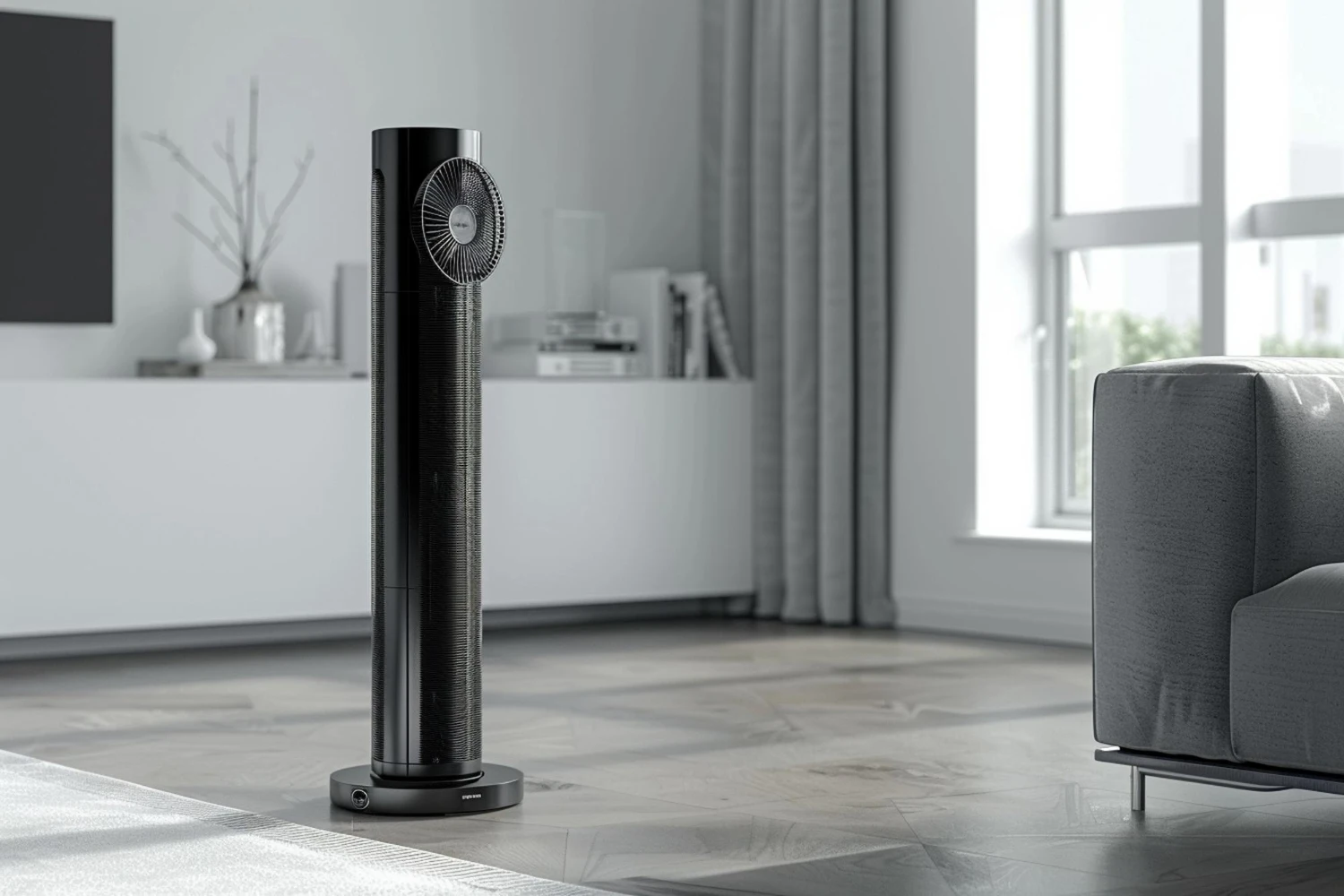
A traditional machine uses large visible blades to chop the air and push it forward. A tower model uses a hidden cylindrical impeller that spins rapidly inside the vertical housing. This unique design creates a much smoother, more consistent wall of moving air.
The tall vertical outlet slot pushes air across your entire body simultaneously. You feel the breeze on your legs and your torso at the same time. This comprehensive coverage provides far better comfort than a localized stream of air.
Manufacturers design these units specifically to fit into tight corners. You can slide a tall unit right between your refrigerator and your pantry door. It occupies very little square footage while delivering massive cooling power.
Seeking The Best Tower Fan For Cooling Performance
You must look beyond the basic marketing claims when you evaluate raw cooling power. Many cheap units make a lot of noise but barely move a piece of paper. The best tower fan for cooling relies on high-quality internal motors.
You should check the cubic feet per minute rating on the manufacturer specification sheet. This technical metric tells you exactly how much air the machine pushes every sixty seconds. You want a high number to combat the extreme heat of a busy kitchen.
Some advanced units feature specific air acceleration channels built into the plastic housing. These internal funnels compress the air right before it exits the machine. This physical compression increases the exit velocity and throws the air much further across the room.
You need this long throw distance if you have a large kitchen island. You want to place the fan in a safe corner and still feel the breeze while you stand at the sink. Weak machines force you to stand right next to them to feel any relief.
The Massive Appeal Of The Best Bladeless Tower Fan
Kitchens contain numerous hazards, especially if you have small children or curious pets running around. Traditional wire cages provide very little protection against tiny fingers poking the fast spinning blades. You must prioritize physical safety when you bring floor hardware into your cooking space.
The best bladeless tower fan eliminates this physical danger completely. These premium machines hide the high-speed impeller completely inside the heavy base unit. The visible top section contains absolutely no moving parts.
The base motor pushes the compressed air up into the hollow top ring. The air then shoots out through microscopic slits in the plastic ring. This creates a powerful, unbroken stream of air that feels incredibly smooth against your skin.
These machines also collect far less sticky kitchen grease than traditional models. You simply wipe the smooth plastic ring with a damp microfiber cloth. You never have to disassemble a metal cage to scrub dirty plastic blades.
Why You Need The Quietest Tower Fan Available
A noisy environment causes immediate psychological stress and ruins your culinary focus. You already deal with sizzling pans, boiling water, and the hum of your refrigerator. You do not want to add the roar of a cheap jet engine to your kitchen symphony.
The quietest tower fan uses advanced acoustic engineering to muffle the internal motor. Companies line the plastic housing with sound-absorbing foam to kill high-frequency mechanical whining. You only hear the soothing rush of the moving air.
This acoustic control matters immensely when you entertain guests. You want to serve appetizers at your kitchen island and hold normal conversations. A loud machine forces everyone to shout over the mechanical noise.
You also need quiet operation when you use digital voice assistants. You ask your best AI recipe generator guide for the next cooking step. The microphone cannot hear your voice if a loud fan drowns out your command.
Maximizing Coverage With An Oscillating Tower Fan
A static stream of air eventually feels uncomfortable if it blasts your skin continuously. You want the air to sweep across the room and mimic a natural outdoor breeze. An oscillating tower fan provides this exact environmental dynamic.
The entire vertical unit rotates slowly back and forth on its heavy base. You can usually set the specific rotation angle using the digital control panel. A ninety-degree sweep covers the main prep area, while a full hundred and eighty-degree sweep covers the entire room.
This sweeping motion helps disperse smoke and strong odors much faster. It physically pushes the heavy cooking smells toward your main ventilation hood. You prevent the scent of fried fish from lingering in your house for three days.
We highly recommend using the oscillation feature during heavy prep work. You move constantly between the sink, the stove, and the refrigerator. The sweeping air follows you across the room and provides constant relief.
Decoding Genuine Tower Fan Reviews
You face a massive wall of identical-looking plastic boxes when you shop online. You cannot trust the manufacturer marketing copy to tell you the truth about durability. You must learn how to read professional tower fan reviews critically.
Ignore reviews that complain about the machine failing to lower the actual room temperature. Fans do not contain refrigerant compressors like air conditioners. Fans cool human skin through sweat evaporation, they do not lower the ambient air temperature.
Look specifically for reviews that mention long-term motor bearing health. Cheap machines develop terrible clicking or grinding noises after three months of daily use. You want hardware that survives years of heavy operation without degrading.
You should also pay attention to complaints about LED display brightness. Many units feature bright blue control screens that illuminate the entire room at night. The best manufacturers include a dark mode that shuts off the display while the machine runs.
Balancing Power With A Focused Air Stream
You must control exactly where the machine pushes the air inside your kitchen. You do not want a powerful tower fan blowing directly across your gas stove. Fast moving air disrupts the gas flame and creates uneven cooking temperatures.
You also want to avoid blowing air directly over your dry ingredient prep station. You turn the machine on and it instantly blows your expensive flour all over the floor. You must establish strategic cooling zones within your workspace.
Position the unit so it blows air down the main walking aisle of your kitchen. Stand directly in this invisible wind tunnel while you chop vegetables or wash dishes. You stay perfectly cool without disrupting your delicate culinary tasks.
You apply this same spatial logic when you boil water using your best electric kettles on the counter. Keep the fast moving air away from the rising steam. You want the steam to rise straight up into your exhaust hood.
Smart Connectivity In Premium Cooling Hardware
The basic plastic remote control feels obsolete in a modern smart home. You misplace the small remote immediately and resort to pressing the physical buttons. You need hardware that connects directly to your wireless network.
Premium cooling devices integrate completely with your smartphone applications. You adjust the fan speed, toggle the oscillation, and set sleep timers right from your screen. You control the kitchen climate without ever washing your hands or walking across the room.
We track this hardware connectivity in our reports on SF restaurants using AI to see how professionals manage temperature. Commercial kitchens automate their climate control entirely. You can build that same automation at home.
You can set up creative software routines using your digital assistant. You program the fan to turn on automatically whenever your smart oven reaches four hundred degrees. The cooling system anticipates the heat load before you even feel it.
Establishing A Comprehensive Air Strategy
A fan only moves the existing air inside the room. You must supply the machine with the highest quality air possible to maintain a healthy cooking environment. You achieve this by pairing your cooling hardware with active air purification.
Many high-end bladeless models now include true HEPA filters inside their base units. They pull the dirty kitchen air through the dense filter before pushing it back into the room. They capture airborne grease, smoke particles, and pet dander instantly.
This combination of cooling and purification justifies a higher premium price tag. You buy one machine that performs two critical environmental functions. You save floor space and reduce your overall electrical consumption.
You must remember to change these internal filters regularly. A clogged HEPA filter forces the internal motor to work twice as hard to pull air. You eventually burn out the fan motor if you ignore the filter replacement warnings.
Integrating Fans With Your Meal Planning
Your physical comfort dictates how often you actually want to cook. If your kitchen feels miserable, you will abandon your healthy meal plans and order expensive takeout. You must view climate control as a core part of your dietary strategy.
You spend Sunday morning creating a strict menu using a chatgpt meal plan prompt to hit your macro goals. You schedule a complex chicken roasting technique for Tuesday evening. You will only execute that plan if the room temperature remains bearable.
Turn your cooling hardware on ten minutes before you start prepping the meal. You pre-cool your skin and establish a comfortable baseline temperature. You prevent the panic and frustration that happens when you overheat while cooking.
This simple environmental habit dramatically increases your cooking consistency. You stick to your nutritional goals because you actually enjoy standing in your kitchen. The hardware supports your human willpower.
Avoiding Floor Space Conflicts With Robots
You must evaluate your floor layout carefully before you buy a tall floor unit. These machines sit directly on your walking surfaces and create physical obstacles. You need to ensure they do not interfere with your other automated hardware.
We review autonomous floor cleaners in our best robot vacuum article for smart homes. A robot vacuum must navigate around the heavy base of your cooling tower. You must tuck the fan into a corner so the robot can still clean the main walkways.
Some cheap fan bases feature sloped plastic edges. Dumb robot vacuums try to climb these sloped edges and get stuck permanently. You return home and find your robot trapped on top of the fan base.
Buy a unit with a sheer vertical base or use the application to draw a digital no-go zone around the fan. You manage the physical traffic in your kitchen to ensure all machines operate perfectly.
Protecting Your Hardware From Kitchen Grease
Your cooking space presents a hostile environment for sensitive electronics. Tiny droplets of vaporized cooking oil float through the air constantly. This invisible grease coats your cabinets, your walls, and your floor appliances.
This grease eventually gets sucked directly into the intake vents of your cooling hardware. The oil coats the internal spinning impeller and attracts heavy dust. The machine eventually loses its aerodynamic efficiency and stops pushing air.
You prevent this by maintaining a strict cleaning schedule for your environmental hardware. You must vacuum the external intake grilles of your tower fan every single week. You use the brush attachment on your vacuum hose to pull the dry dust out.
You should also use pure water when you wipe down the plastic exterior. We explain this chemical purity in our guide on how to make distilled water at home for appliance maintenance. Pure water cuts through the surface grease without leaving mineral streaks on the shiny plastic.
Managing Multiple Fan Units In Large Kitchens
A massive open-concept home might require more than one machine to handle the thermal load. A single unit cannot push air effectively past a distance of twenty feet. You must set up a cross-ventilation system using two distinct machines.
Place one unit near the primary heat source to push the hot air away from the stove. Place the second unit near a doorway to push fresh air into the room. This creates a continuous river of moving air that flushes the heat out of the house entirely.
You can group smart fans together inside your phone application. You press one button and both machines turn on simultaneously. You control the entire environmental ecosystem with a single command.
This dual setup allows you to run both machines at medium speed rather than running one machine at maximum speed. You move the same total volume of air but generate significantly less mechanical noise.
Testing The Best Tower Fans In Person
You can read thousands of specifications online but you really need to hear the machine yourself. You cannot judge acoustic quality through a computer screen. You must visit a physical retail location to test the hardware.
Many local San Francisco tech retailers feature active display units on their showroom floors. You walk up to the machine, turn it to the highest setting, and stand three feet away. You evaluate the physical force of the air against your face.
Listen specifically for weird mechanical rattling or unstable base wobbling. The unit should feel completely planted on the floor even when it rotates. A wobbly machine indicates cheap plastic internal gears that will break quickly.
You also test the physical buttons on the control panel. They should provide a satisfying tactile click when you press them. Mushy buttons reveal poor manufacturing tolerances and cheap internal electronic boards.
Addressing Energy Consumption And Electrical Load
You run your cooling hardware for hours at a time during the summer. You must calculate the electrical impact this has on your monthly utility bill. The best tower fans for cooling utilize highly efficient DC motors to save power.
Older AC motors consume significant electricity and actually generate their own internal heat. Modern brushless DC motors run incredibly cool and use a fraction of the electricity. You pay a slightly higher upfront cost for the hardware but save money on your power bill long term.
You also reduce the load on your home air conditioning system. You raise your central thermostat by four degrees and rely on the fans to keep you comfortable. The localized cooling requires much less electricity than cooling the entire house.
We analyze these energy savings when we review the best AI kitchen gadgets available today. Efficiency matters just as much as raw power in a modern connected home.
The Future Of Localized Kitchen Cooling
Hardware manufacturers constantly research new ways to keep humans comfortable during intense physical labor. We expect the next generation of cooling devices to feature incredible new capabilities. The basic spinning impeller will eventually evolve into something much smarter.
Future units will feature internal thermal cameras that track your physical location in the room. The machine will see you standing at the sink and automatically direct the air stream precisely at your body. When you move to the stove, the air stream will follow you.
We also anticipate machines that actively chill the air using solid-state thermoelectric plates. These devices will function as miniature, compressor-free air conditioners. They will drop the actual ambient temperature by several degrees instantly.
You improve your daily culinary life right now by investing in current technology. You buy a reliable, quiet, and powerful machine to conquer the heat. You regain control over your kitchen environment and rediscover the physical joy of cooking.
Other blogs
Fridge Freezing Food? Here’s Why and How to Fix It
A fridge freezing food is almost always fixable — and rarely means a major repair. This guide covers every common…
Read More →Slow Cooker to Dutch Oven Conversion: The Full Guide
Converting a slow cooker recipe to a Dutch oven comes down to three adjustments: cut the cook time to about…
Read More →Air Fryer vs Convection Oven: Are They the Same Thing?
Here’s the question that quietly drives a lot of kitchen appliance confusion: is an air fryer just a convection oven?…
Read More →Induction vs Gas: The Truth Most Guides Won’t Tell You
The induction vs gas debate has become strangely tribal. Gas devotees talk about flame control and the feel of real…
Read More →