

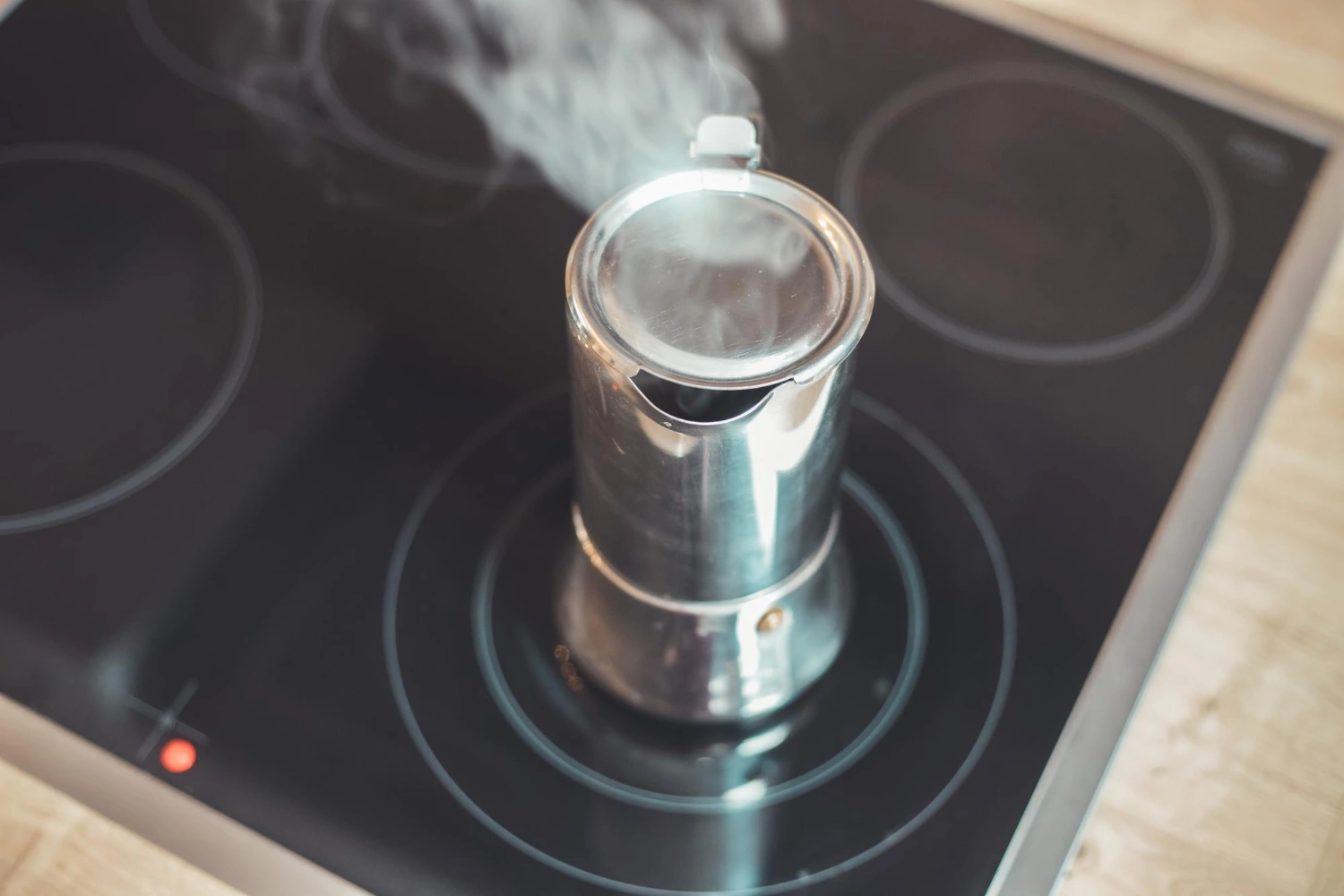
The induction vs gas debate has become strangely tribal. Gas devotees talk about flame control and the feel of real cooking. Induction advocates cite efficiency numbers and clean surfaces. Both sides are right about some things and selectively quiet about others. This guide is an attempt to give an honest accounting of both technologies, covering energy efficiency, cooking performance, safety, cost, and the practical realities of switching.
The short version: induction wins on almost every measurable metric. But gas has real advantages in specific situations, and dismissing them entirely leads to buyer’s remorse. Here’s what actually matters when you’re choosing between these two cooktop types.
How Induction Cooking Actually Works
Induction cooktops don’t generate heat on the surface. Instead, they create a magnetic field that induces electrical current directly in the cookware. The pot or pan itself becomes the heating element. The cooktop surface stays relatively cool throughout.
This is why induction is so efficient. With gas, significant heat energy disperses around the sides of the pot and into the surrounding air. An open flame at full power might transfer 40 percent of its energy into the food; the rest heats the kitchen. Induction transfers roughly 85 to 90 percent of its energy directly into the cookware, according to data from the U.S. Department of Energy.
The practical result: induction boils water significantly faster than gas under equivalent energy conditions. Consumer Reports testing found that induction cooktops boil water 20 to 40 percent faster than comparable gas and conventional electric models. That speed difference adds up across a day of cooking.
Gas Cooktops: What They Still Do Better
Gas has genuine advantages, and they shouldn’t be dismissed out of hand.
Flame cooking is not purely aesthetic. An open flame chars the surface of food in a way that produces specific Maillard reaction compounds different from what you get from radiant or inductive heat. The direct char on a pepper or eggplant for a roasted vegetable dish, the sear marks on a tortilla, the behavior of a wok at high heat with direct flame contact: these are technically different experiences than cooking on a flat induction surface.
Wok cooking is the strongest remaining argument for gas. A traditional wok requires high-heat contact across a curved surface that extends up the sides of the wok. Flat induction cooktops only make contact with the flat bottom of a wok, leaving the curved sides unheated. Specialty wok-burner gas setups generate heat at a level and distribution that induction fundamentally cannot replicate without specialty induction wok attachments.
Gas also works during power outages. This is a minor consideration for most households but a meaningful one in areas with unreliable electricity. And gas ranges require no special cookware. Any pot or pan works. Induction requires ferromagnetic cookware, anything a magnet sticks to, which excludes most aluminum and copper pieces.
The Energy Efficiency Gap Is Real, But Complicated
The headline numbers are stark. Induction operates at 85 to 90 percent efficiency at the point of use. Gas ranges at about 32 to 40 percent. On paper, induction uses roughly twice the energy of gas to achieve the same cooking outcome, adjusted for efficiency.
But the honest calculation includes electricity generation. In regions where electricity comes predominantly from natural gas power plants, efficiency losses in generation and transmission reduce induction’s real-world advantage. The U.S. Energy Information Administration data shows the average electricity grid in the U.S. is about 40 percent efficient at converting fuel to delivered electricity, though this varies significantly by region and is improving as renewable generation increases.
In states with high renewable electricity penetration (California, Washington, New York), induction is unambiguously both cheaper to operate and lower in carbon emissions than gas. In regions heavily reliant on coal-fired power, the math is tighter. The trajectory of the grid matters too: as electricity gets cleaner, induction’s environmental advantage grows automatically. A gas stove burning fossil fuels doesn’t improve over time.
Quick comparison:
| Category | Induction | Gas | Electric Coil |
| Efficiency at use | 85-90% | 32-40% | 74-77% |
| Boil speed | Fastest | Moderate | Slowest |
| Cookware req. | Magnetic only | Any type | Any type |
| Indoor air quality | No emissions | NOx, CO, formaldehyde | No emissions |
Indoor Air Quality: The Underreported Gas Problem
This is the issue that has shifted the induction vs gas debate significantly in recent years. Burning natural gas for cooking produces nitrogen oxides, carbon monoxide, and formaldehyde. These aren’t trace amounts in poorly ventilated spaces. A peer-reviewed study published in Environmental Science and Technology found that gas stoves leak benzene, a known carcinogen, even when not in use.
A separate analysis estimated that U.S. gas stoves emit approximately 6.2 million tons of CO2 equivalent annually. And when not in operation, gas ranges leak additional methane, a potent greenhouse gas.
The health implications for households with children or anyone with respiratory conditions are increasingly taken seriously by researchers. Multiple cities and states have enacted policies encouraging or requiring all-electric cooking in new construction, citing these indoor air quality concerns.
Induction produces none of these emissions. The cooktop surface itself doesn’t get hot enough to burn off food residue or oils. This matters for anyone who has asthma, lives in a poorly ventilated apartment, or has young children spending significant time in the kitchen.
Induction Cooktop Safety Advantages
The cooktop surface of an induction range doesn’t get hot on its own. It gets warm from contact with a hot pan, but not hot enough to cause serious burns. Turn off the burner and the surface cools in seconds. Children who touch an induction surface accidentally are at far lower burn risk than with gas or conventional electric, where the surface stays dangerously hot for minutes after use.
There’s no open flame, which removes ignition risks entirely. No gas to leak. No pilot lights to blow out. For households with older adults, young children, or anyone who has had a gas-related incident, the safety profile of induction is genuinely meaningfully different.
For a broader look at how kitchen appliance choices affect your home environment, our best tower fan and kitchen airflow guide covers ventilation considerations relevant to both cooking setups.
Switching from Gas to Induction: What It Actually Costs
Switching is not a simple swap. If your kitchen currently has gas lines and no 240V electrical outlet near the range, you’ll need electrical work. A dedicated 240V circuit installation typically costs $200 to $500, more in older homes with outdated panels. This is a real upfront cost that doesn’t show up in cooktop comparison articles.
Cookware replacement can add to the cost. If you have a full set of aluminum or copper cookware, induction requires replacing it with stainless steel, cast iron, or induction-compatible pieces. Some households spend $0 on cookware if their existing pans are already magnetic. Others spend $200 to $500 replacing full sets.
Induction cooktops themselves range from $500 to $3,000 for built-in models. Portable single-burner induction cooktops cost $30 to $80 and are a practical way to test induction cooking before committing to a full installation. Many people discover they adapt to induction quickly and then proceed with a full replacement.
Frequently Asked Questions: Induction vs Gas
Is induction cooking better for cooking quality than gas?
For most cooking tasks, yes. Induction’s precise, responsive temperature control produces more consistent results for techniques like simmering, melting chocolate, and maintaining sauce temperatures. The response to adjustment is nearly instant, similar to gas but without the thermal mass delay of electric coils. Where gas holds an edge is in specific high-heat techniques, particularly wok cooking and direct char applications. Professional chefs who use induction consistently praise the temperature precision; those who resist it most often cite wok cooking as the sticking point.
Do I need to replace all my cookware for induction?
Only if your current cookware isn’t magnetic. To test your existing pans, hold a refrigerator magnet to the bottom of each pot or pan. If the magnet sticks firmly, the cookware works with induction. Cast iron, most stainless steel, and enameled cast iron all work. Pure aluminum, most copper, and some non-stick pans without a steel base layer do not. Many modern non-stick pans are sold as induction-compatible; check the product listing or packaging to confirm.
Is induction or gas cheaper to operate?
This depends heavily on your local utility rates. In the U.S., natural gas is generally cheaper per BTU than electricity in most regions, but because induction is 2 to 3 times more efficient at converting energy to cooking heat, the operating cost difference narrows significantly. In areas with high gas prices or low electricity rates (or significant renewable electricity), induction can actually be cheaper month to month. The Environmental Protection Agency and Department of Energy both maintain tools for comparing energy costs by region that let you run the numbers specific to your location.
For those also considering water quality improvements in a modernized kitchen, see our guide on making distilled water at home as a complementary kitchen upgrade worth considering.
The Honest Verdict on Induction vs Gas
For most households making a new purchase or a renovation decision in 2026, induction is the better choice on nearly every practical measure: faster heating, better efficiency, safer surface, better indoor air quality, and easier cleaning. The cooktop surface wipes clean in seconds because spills don’t bake onto a cool surface. Induction is better by design in almost every category except one.
That one exception is wok cooking, and even there, flat-bottomed wok induction setups have improved enough that most home cooks find them acceptable. Only professional-level wok technique genuinely suffers from the transition.
Gas isn’t going away from home kitchens in the near term. But the trajectory of the appliance market, tightening efficiency standards, declining gas infrastructure investment, and improving induction technology, points clearly toward induction as the default cooking technology of the future. If you’re buying a cooktop that you expect to use for the next 10 to 15 years, induction is the forward-looking choice.
Other blogs
Fridge Freezing Food? Here’s Why and How to Fix It
A fridge freezing food is almost always fixable — and rarely means a major repair. This guide covers every common…
Read More →Slow Cooker to Dutch Oven Conversion: The Full Guide
Converting a slow cooker recipe to a Dutch oven comes down to three adjustments: cut the cook time to about…
Read More →Air Fryer vs Convection Oven: Are They the Same Thing?
Here’s the question that quietly drives a lot of kitchen appliance confusion: is an air fryer just a convection oven?…
Read More →Smart Coffee Maker: Is WiFi in Your Brewer Worth It?
The promise of a smart coffee maker is straightforward: coffee ready the moment you wake up, brew started from your…
Read More →