

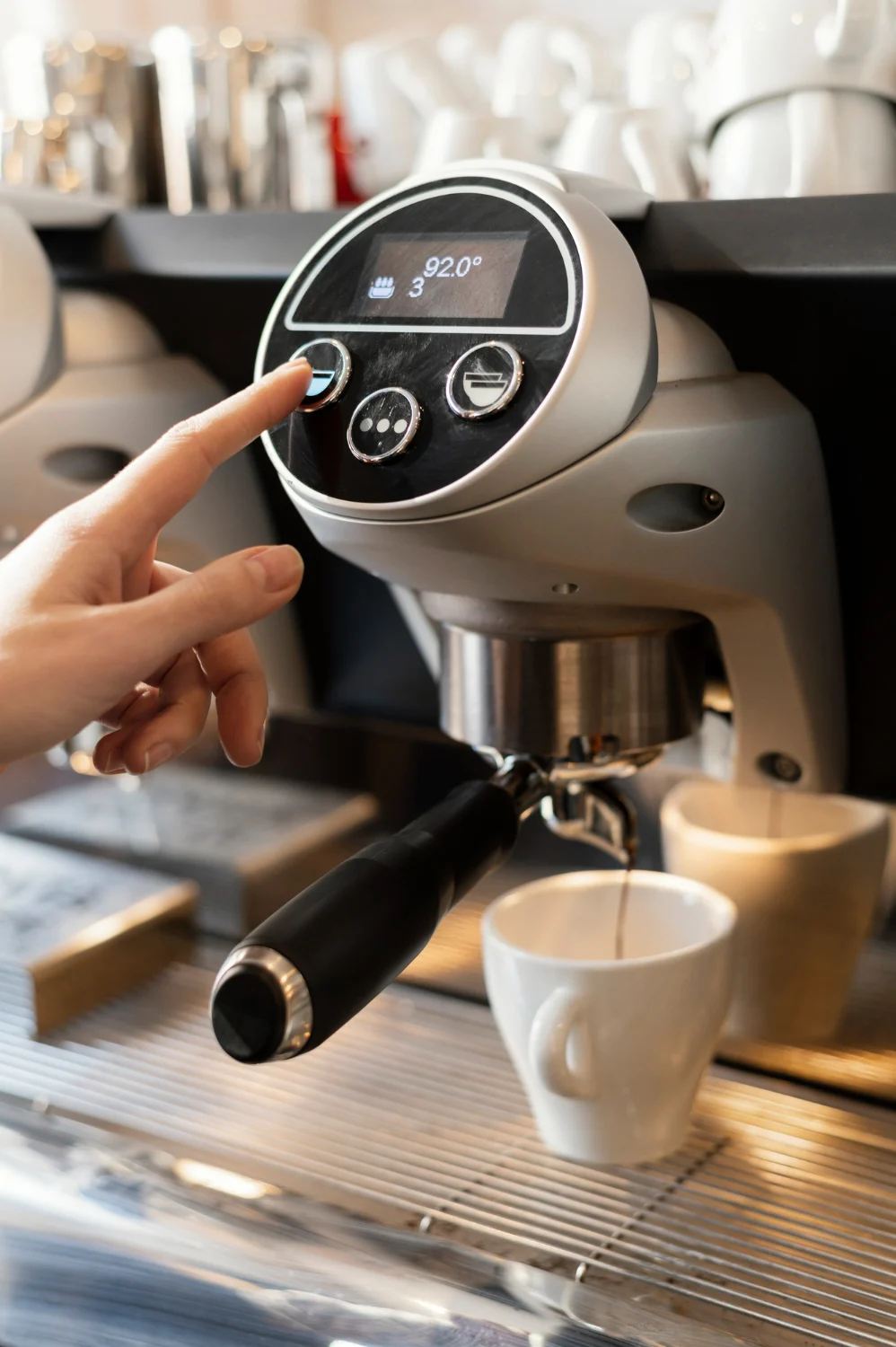
The promise of a smart coffee maker is straightforward: coffee ready the moment you wake up, brew started from your phone before you get out of bed, voice commands through Alexa when your hands are full. It sounds like the future of mornings. And for some households, it genuinely is. For others, the smart features collect digital dust while the machine brews perfectly good coffee the old-fashioned way.
Whether a WiFi coffee maker or Bluetooth coffee machine is worth the premium over a conventional brewer depends entirely on how your mornings actually work. This guide covers the real differences between smart and conventional brewers, which connected features actually get used, and which models justify the price in 2026.
What Makes a Coffee Maker ‘Smart’?
Smart coffee makers fall into a spectrum. At the basic end, a coffee maker with Bluetooth or WiFi offers remote start from an app. You can trigger a brew cycle from your phone while still in bed. That’s the core feature, and it’s genuinely useful if you prep your machine the night before.
More advanced smart coffee machines connect to smart home ecosystems. An Alexa coffee maker responds to voice commands: ‘Alexa, start the coffee maker’ is a real, working command on compatible devices. Google Assistant integration works similarly. HomeKit-compatible models appear in Apple’s Home app for automation and Siri control.
The most capable smart brewers include scheduling, brew strength adjustment via app, and in some cases, integration with connected grinders. A smart coffee maker with grinder, where grinding and brewing are both app-controllable, is the highest-end expression of this category.
What smart features don’t change: the fundamental brewing mechanism. A WiFi-enabled drip brewer still makes drip coffee using the same extraction principles as a non-connected machine. The quality of the brew depends far more on water temperature, brew time, and coffee-to-water ratio than on connectivity.
App-Controlled Coffee Makers: Which Features Get Used Most?
Remote start is the undisputed winner. The ability to start a brew from another room, or from upstairs before coming down, is the feature that converts casual interest into genuine daily utility. Setting up the machine the night before and pressing ‘brew’ from the app in the morning takes 2 seconds and produces coffee ready when you reach the kitchen.
Scheduling runs close behind for routine-driven households. Set the machine to start at 6:45 AM every weekday, and it operates like a perfectly reliable automatic coffee timer. Most smart coffee makers let you save multiple schedules, which matters for households with varied morning routines between weekdays and weekends.
Brew strength adjustment via app is useful but used less often once a preference is established. Most people find their preferred strength setting within a week and rarely change it. Temperature adjustment, on models that offer it, is similarly a set-and-forget preference rather than a daily active choice.
Usage monitoring, which tracks how many cups you’ve brewed and when, is the smart feature that almost nobody uses regularly. It exists, but it’s a solution looking for a problem.
Best Smart Coffee Maker Brands in 2026
Hamilton Beach and Cuisinart both offer app-controlled drip brewers at reasonable price points. These are where most households start with connected coffee, and they deliver the essentials: remote start, scheduling, and reliable brew quality, without requiring a significant investment.
Breville’s Precision Brewer, while not the most heavily app-dependent machine, is SCAA-certified (approved by the Specialty Coffee Association of America for meeting precise temperature and brewing standards) and offers some connectivity in higher-end configurations. For coffee quality as the primary goal with smart features as a bonus, Breville is consistently one of the best options.
Smarter Coffee from the brand Smarter is a dedicated smart coffee machine brand that has been developing connected brewers for over a decade. Their iCoffee products integrate well with smart home ecosystems and include granular app control. The brand is more popular in Europe than North America but ships internationally.
On the single-serve side, some Keurig K-Supreme models include WiFi connectivity and Alexa integration. For households that primarily use pods, a smart Keurig model offers scheduled brewing and voice control without switching to a different format.
Smart Coffee Maker with Grinder: Is It Worth the Upgrade?
A built-in grinder makes the freshness argument more compelling. Coffee begins losing aromatic compounds within minutes of grinding; pre-ground coffee from a bag loses significantly more. A machine that grinds fresh beans immediately before brewing produces noticeably better-tasting coffee than one using pre-ground.
Smart coffee makers with integrated grinders from brands like De’Longhi and Breville offer app control over grind size, brew strength, and scheduling. The complexity increases, and so does the price point, typically $300 to $600 or more for premium integrated systems.
The trade-off: integrated grinder-brewers are harder to clean and more prone to mechanical failure than a separate grinder and brewer. If one component breaks, the whole machine is out of commission. Many serious home coffee enthusiasts prefer a standalone burr grinder paired with a quality brewer, even if it means a bit more counter space.
For most households, a smart brewer using pre-ground coffee stored properly (in an airtight container at room temperature, not the freezer) produces excellent results. The smart-with-grinder category earns its keep for coffee enthusiasts who want the freshest possible cup with maximum convenience.
For a complete home espresso and coffee setup, see our best home espresso machines guide for when you’re ready to go beyond drip brewing.
WiFi Coffee Maker vs. Bluetooth Coffee Maker: Which Connection Is Better?
The distinction matters more than most buyers realize. A Bluetooth coffee maker connects directly to your phone, which means you need to be within Bluetooth range, typically 30 feet, to control it. The connection drops if your phone moves away or if the app runs in the background and loses the pairing.
A WiFi coffee maker connects to your home network. You can start a brew from across the house, or in theory from anywhere with internet access. More practically, WiFi integration enables smart home automation: a morning routine that turns on the lights, raises the thermostat, and starts the coffee maker simultaneously. Bluetooth can’t do that.
For voice control through Alexa or Google Assistant, WiFi is required. Bluetooth-only machines don’t communicate with smart home hubs. If smart home integration is part of your reason for buying, WiFi is not optional.
Does a Smart Coffee Maker Actually Improve Your Coffee?
Not directly, and this is worth being honest about. Smart connectivity doesn’t change extraction chemistry. What it changes is the consistency and convenience of your brewing routine, which indirectly improves your coffee because you’re more likely to brew at the right time with the right setup.
The SCAA’s standards for coffee brewing specify water temperature between 195°F and 205°F, a brew time of 4 to 8 minutes for drip, and a coffee-to-water ratio of approximately 1:16 by weight. Smart brewers that meet these standards, whether connected or not, produce great coffee. Cheap brewers that don’t, regardless of their app capabilities, produce mediocre coffee.
The smart feature that most directly improves coffee quality is temperature control. Some app-controlled brewers let you set precise brew temperatures, which matters for lighter roasts that benefit from lower temperatures and darker roasts that don’t. This is where the data justifies the technology.
For pairing your morning coffee routine with smart kitchen planning tools, our best microwave and smart kitchen guide covers complementary smart appliances worth knowing about.
Frequently Asked Questions About Smart Coffee Makers
Can you use a smart coffee maker without the app?
Yes, in almost every case. Smart coffee makers function as conventional brewers without the app; you just lose the remote control and scheduling features. The physical buttons and controls on the machine itself handle basic brewing. This matters because apps get discontinued, update compatibility breaks, and software support has a finite lifespan. A machine that still works when the app goes away is a machine that remains useful for years beyond its connected lifespan.
Do smart coffee makers work with Alexa?
Many do, but compatibility varies by model and region. Alexa-enabled coffee makers need to be explicitly listed as compatible in Amazon’s smart home ecosystem, and you need to enable the corresponding Alexa skill. Hamilton Beach, Cuisinart, and select Breville models have confirmed Alexa integration. Always verify current compatibility on the manufacturer’s website before purchasing, since skill availability and certification can change with software updates.
How long do smart coffee makers last compared to regular ones?
The mechanical lifespan of a smart coffee maker is comparable to a conventional one, typically 5 to 10 years with proper maintenance. The connectivity features, however, may stop working before the machine itself fails. Apps lose support, smart home integrations break after platform updates, and manufacturers occasionally discontinue cloud services for older models. Buying a smart coffee machine from a well-established brand with a track record of long-term software support reduces this risk. Cuisinart and Breville have both demonstrated longer app support cycles than some smaller brands.
The Bottom Line on Smart Coffee Makers
A smart coffee maker earns its premium over a conventional brewer for one specific type of household: people who want coffee ready the moment they wake up, have a consistent morning routine, and use or plan to use smart home automation. Remote start and scheduling are the features with real daily utility, and they’re available on mid-range smart brewers without paying for a full-featured premium model.
For coffee enthusiasts primarily interested in brew quality, the smart label matters less than SCAA certification, water temperature precision, and bloom functionality for pour-over profiles. These are features found on non-smart specialty brewers at comparable prices.
And for anyone who just wants great coffee without the setup overhead, a quality conventional brewer and a reliable timer outlet achieves 80 percent of the smart mug experience at 20 percent of the cost. Smart coffee tech is genuinely useful; it’s just not universally necessary.
Other blogs
Fridge Freezing Food? Here’s Why and How to Fix It
A fridge freezing food is almost always fixable — and rarely means a major repair. This guide covers every common…
Read More →Slow Cooker to Dutch Oven Conversion: The Full Guide
Converting a slow cooker recipe to a Dutch oven comes down to three adjustments: cut the cook time to about…
Read More →Air Fryer vs Convection Oven: Are They the Same Thing?
Here’s the question that quietly drives a lot of kitchen appliance confusion: is an air fryer just a convection oven?…
Read More →Induction vs Gas: The Truth Most Guides Won’t Tell You
The induction vs gas debate has become strangely tribal. Gas devotees talk about flame control and the feel of real…
Read More →