

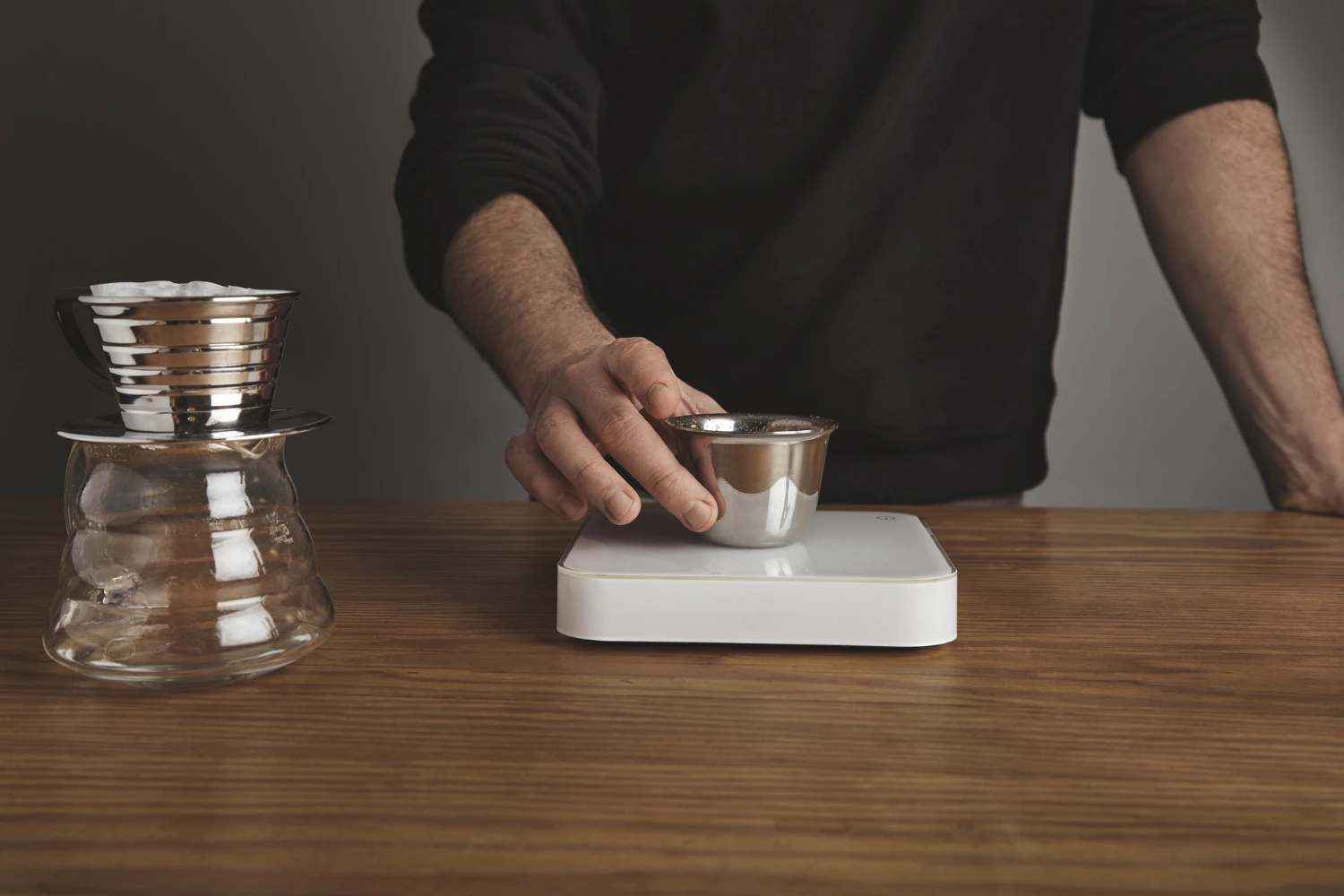
When people search for ‘Wirecutter kitchen scale,’ they usually aren’t specifically looking for Wirecutter’s opinion. They’re looking for trusted, tested recommendations on food scales, and Wirecutter has built a reputation for delivering exactly that. Their picks change over time as new products come to market, but the Etekcity smart food scale has appeared in their recommendations alongside a few other contenders in recent years.
This guide goes further than any single publication’s shortlist. It explains what separates a smart food scale from a basic one, how to use a kitchen scale for weight loss and macro tracking, and whether the Etekcity models that routinely top these lists actually deserve their ranking, or if something else fits your needs better.
Why a Kitchen Scale Changes How You Eat
Most people significantly underestimate or overestimate portion sizes when measuring by volume. A cup of granola sounds like a modest breakfast until you weigh it and realize you’ve scooped 80 grams when a serving is 45. A tablespoon of peanut butter, measured loosely, can easily run 30 percent over the labeled weight.
This is why food scales for weight loss and calorie counting are more effective than measuring cups. You’re measuring mass, which doesn’t lie. Whether your peanut butter is smooth, crunchy, or generously scooped into a measuring spoon, the scale tells you exactly what you have.
For baking, the argument is even stronger. Volume measurements in baking are notoriously imprecise because ingredients settle and pack differently. Bread flour scooped versus spooned into a cup can vary by 20 grams or more. Professional bakers have used weight measurements for decades for this reason. A kitchen scale for baking is less a convenience than a prerequisite for consistency.
What Is a Smart Food Scale, Exactly?
A smart food scale connects to a smartphone app via Bluetooth. The most capable versions don’t just weigh food; they identify it from a database and calculate nutritional content per gram in real time. You place an apple on the scale, select ‘apple’ in the app, and the display shows you calories, carbohydrates, protein, and fat as you add or remove food.
The Etekcity smart scale, the one most often mentioned in the context of Wirecutter food scale reviews, works this way. It pairs with the VeSync app (Etekcity’s companion platform), logs nutritional data automatically, and can export food logs to apps like MyFitnessPal. For anyone tracking macros seriously, removing manual logging steps reduces the friction that leads to log abandonment.
Basic food scales, by contrast, display weight only. They’re accurate, simple, cheap, and entirely adequate for baking. The smart features add value primarily for people in active nutrition tracking mode, where knowing the caloric density of food at the moment of preparation changes their decisions.
Are Food Scales Accurate Enough to Trust?
Accuracy varies by mechanism and price point. Consumer-grade kitchen scales use strain gauge load cells, which measure tiny electrical resistance changes caused by the weight pressing on the cell. In good-quality scales, accuracy is typically plus or minus 1 gram. At 100 grams, that’s a 1 percent margin of error. Acceptable for nutrition tracking; excellent for baking.
Budget scales under $10 can drift significantly with temperature changes and wear. They also tend to have slower response times and lower maximum weight capacities. For calorie counting, a 5-gram error in a 300-gram meal adds up across multiple meals per day. Over a week, inaccurate logging can distort your calorie picture by 300 to 500 calories, enough to meaningfully affect your progress.
For most purposes, spending $20 to $50 buys you a scale with reliable accuracy, a clean tare function, and enough platform area to hold a mixing bowl. The Etekcity EK6015, one of the models highlighted in smart food scale reviews, sits in this range and consistently receives high marks for accuracy in independent tests.
How to Use a Kitchen Scale for Weight Loss
The process is simpler than most people expect. Place your plate or bowl on the scale, press tare (which zeroes out the empty container’s weight), then add food. Each ingredient can be zeroed out in sequence, so you build a meal layer by layer without using multiple containers.
For tracking macros specifically, the smart scale’s database integration is where the real gain comes in. But even a non-smart scale works if you’re willing to manually enter weights into a tracking app. The friction difference between smart and non-smart scales is real but smaller than ads suggest. If you’re already disciplined about logging, a $25 basic scale does 90 percent of what a $70 smart scale does.
Where smart scales earn their price is convenience for people who are borderline consistent with logging. Reducing the number of manual steps keeps you honest on days when motivation dips. If the log takes 30 seconds instead of 2 minutes, you’re more likely to do it.
For additional tools that can help with structured meal planning, check out our ChatGPT meal plan guide which covers how AI tools can help you build balanced meal schedules around your nutritional goals.
Etekcity Smart Scale: Is It Really That Good?
The Etekcity Nutrition Scale, reviewed positively by multiple publications including in the Wirecutter ecosystem, earns its reputation through a combination of reliable accuracy, a genuinely useful app, and a reasonable price. The VeSync app has a large food database and integrates with popular tracking platforms.
That said, it’s not flawless. App-dependent features only work when Bluetooth is active and the app is open on your phone, which is obvious but still a minor friction point. The food database, while large, has gaps for regional foods and restaurant items. And like all Bluetooth food scales, the connection can occasionally drop in noisy wireless environments.
Competing smart macro scales worth considering include the RENPHO Smart Food Scale and the Greater Goods Kitchen Scale. RENPHO’s app is well-regarded for its UX. Greater Goods builds their scale in partnership with a nutrition platform and has slightly better accuracy claims at the low end of weights.
None of these differences are dramatic enough to make a wrong choice feel like a mistake. If you want a smart scale and Etekcity fits your budget, buy it confidently. If you find a better deal on RENPHO or Greater Goods, you won’t be disappointed.
Best Kitchen Scale for Baking: What Matters Most
For baking, the priority list is different from nutrition tracking. Accuracy still matters, but you also want a scale that reads in 1-gram increments (rather than 2 or 5), handles at least 5 kilograms maximum weight (for larger doughs), and has a platform large enough to sit a mixing bowl on without blocking the display.
Smart features are largely irrelevant for baking. You don’t need a food database when you’re measuring flour and butter. You need precise, repeatable measurements and a responsive tare function. The OXO Good Grips scale, a longtime Wirecutter recommendation for baking, is often mentioned precisely because it hits these requirements without unnecessary complexity.
Pull-out display designs, where the readout extends forward and stays visible under a large mixing bowl, are a genuinely useful feature if you bake large quantities regularly. Standard scales with the display embedded in the platform become impossible to read once a large bowl sits on top.
Frequently Asked Questions About Kitchen Scales
How accurate do kitchen scales need to be for weight loss?
For weight loss and calorie tracking, a scale accurate to plus or minus 1 gram is more than sufficient. When you’re measuring a 200-gram portion of chicken breast, a 1-gram error represents a 0.5 percent margin. Over a full day of eating, this level of imprecision has essentially no practical effect on your calorie count. The bigger sources of error in nutrition tracking are food database inaccuracies, cooking losses (meat loses water weight when cooked), and honest mistakes in portion estimation rather than scale precision. A $25 scale accurate to 1 gram does everything you need for weight loss tracking.
Can a food scale help with macro tracking specifically?
Yes, it’s one of the most effective macro tracking tools available. Tracking macros, protein, carbohydrates, and fat, requires knowing exact quantities because 10 grams of protein matters differently depending on whether you’re tracking for muscle building, weight loss, or athletic performance. Volume measurements simply aren’t reliable enough at that level of detail. A food scale removes the volume ambiguity entirely. Combined with an app that calculates macros per gram, you get precise data at every meal. Smart food scales with app integration automate the calculation step, reducing the cognitive load of tracking.
Does the Wirecutter kitchen scale recommendation change often?
Wirecutter updates their recommendations when significantly better products launch, when prices change, or when long-term testing reveals reliability issues. Their kitchen scale category has seen a few top picks change over the years as smart scales with better apps entered the market. The general principle of their recommendation methodology, testing multiple units, prioritizing value and longevity over novelty, stays consistent. If you’re buying based on a Wirecutter recommendation that’s more than a year old, it’s worth checking if the pick has been updated. The recommendation for the Etekcity smart scale has been relatively stable, but their basic scale pick has shifted a few times.
For those focused on building a healthier home kitchen overall, our guide on making distilled water at home covers water quality considerations that pair naturally with a health-conscious kitchen approach.
The Scale You Get Is Only Part of the System
A food scale is a data collection tool. Its value depends entirely on how you use the data it generates. A $70 smart scale with a beautiful app doesn’t help you if you log inconsistently. A $20 basic scale used every single day for a year generates more actionable nutrition insight than any smart device used sporadically.
The research on food tracking is clear: people who consistently log their food intake lose more weight and maintain it better than those who track intermittently. The mechanism is simple. Tracking creates awareness. Awareness influences decisions. The format of tracking, digital, paper, or smart-scale-integrated, matters far less than consistency.
So the real question when choosing a kitchen scale isn’t which one has the best app or the highest Wirecutter rating. It’s which one you’ll actually use every day without it feeling like a chore. For some people, that’s a smart scale with automated logging. For others, it’s a small, simple, inexpensive scale that doesn’t need charging or a connected phone. Either can work. What doesn’t work is a scale sitting unused in a cabinet because the setup felt like too much effort.
Other blogs
Fridge Freezing Food? Here’s Why and How to Fix It
A fridge freezing food is almost always fixable — and rarely means a major repair. This guide covers every common…
Read More →Slow Cooker to Dutch Oven Conversion: The Full Guide
Converting a slow cooker recipe to a Dutch oven comes down to three adjustments: cut the cook time to about…
Read More →Air Fryer vs Convection Oven: Are They the Same Thing?
Here’s the question that quietly drives a lot of kitchen appliance confusion: is an air fryer just a convection oven?…
Read More →Induction vs Gas: The Truth Most Guides Won’t Tell You
The induction vs gas debate has become strangely tribal. Gas devotees talk about flame control and the feel of real…
Read More →