

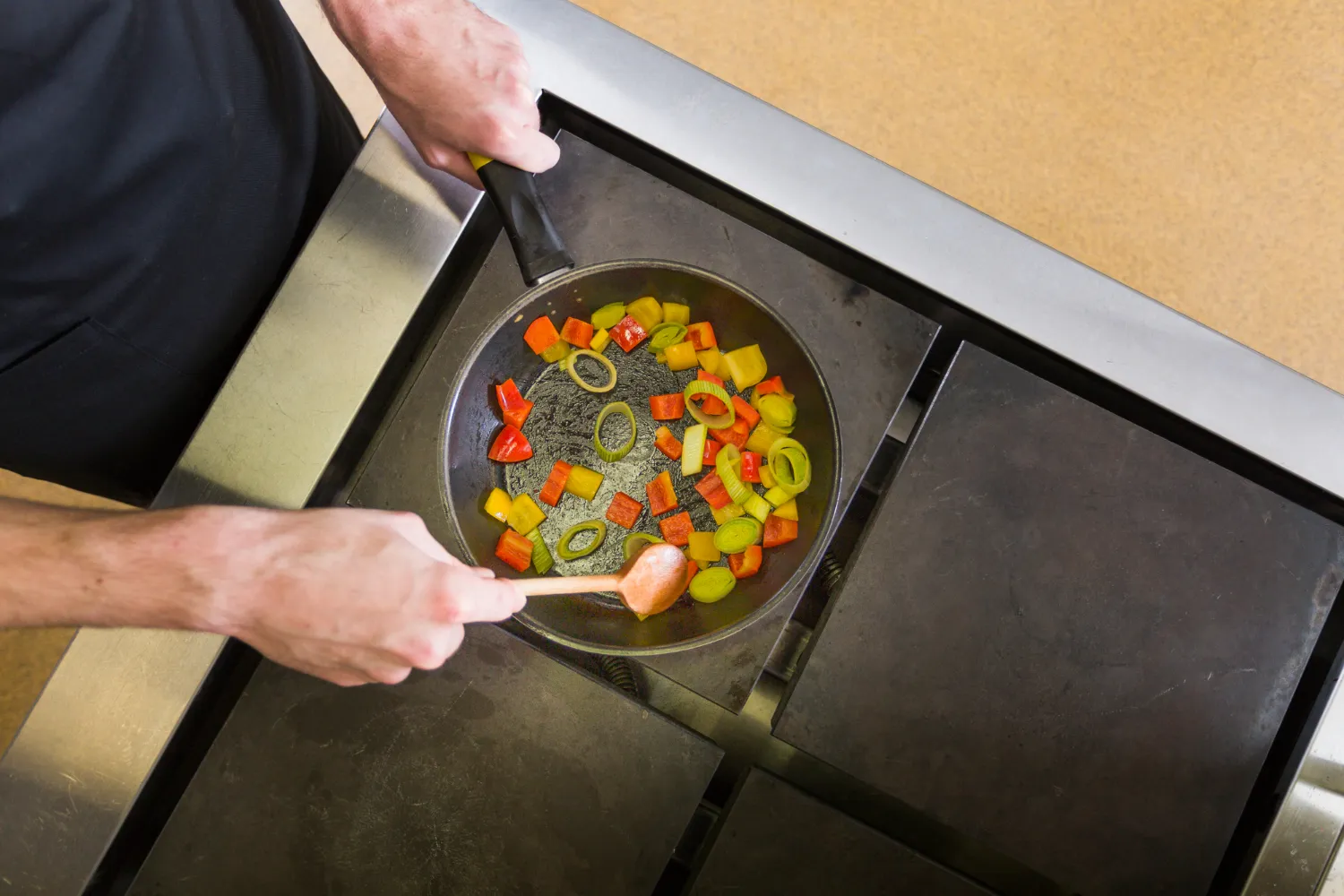
Cooking a steak shouldn’t feel like defusing a bomb. Yet, for most home cooks, the moment a beautiful, expensive piece of meat hits a hot pan, the anxiety begins. Is the pan too hot? Is it too cold? If I flip it now, will it be gray? If I leave it for one more minute, will it turn into shoe leather?
For generations, cooking meat was an art form that relied on intuition, experience, and a lot of luck. But in San Francisco, where we love applying engineering solutions to everyday problems, luck is no longer an acceptable ingredient.
Enter the era of AI-powered precision cooking.
While the concept of “sous vide” (cooking food in a temperature-controlled water bath) has been around for decades, the integration of Artificial Intelligence has completely revolutionized the technique. We are officially in the “Sous Vide 2.0” generation. By using machine learning, thermodynamic algorithms, and smart kitchen appliances, anyone can now replicate the exact texture and doneness of a Michelin-starred meal with zero stress.
Here is how AI is taking the guesswork out of the kitchen.
What Was Wrong with Sous Vide 1.0?
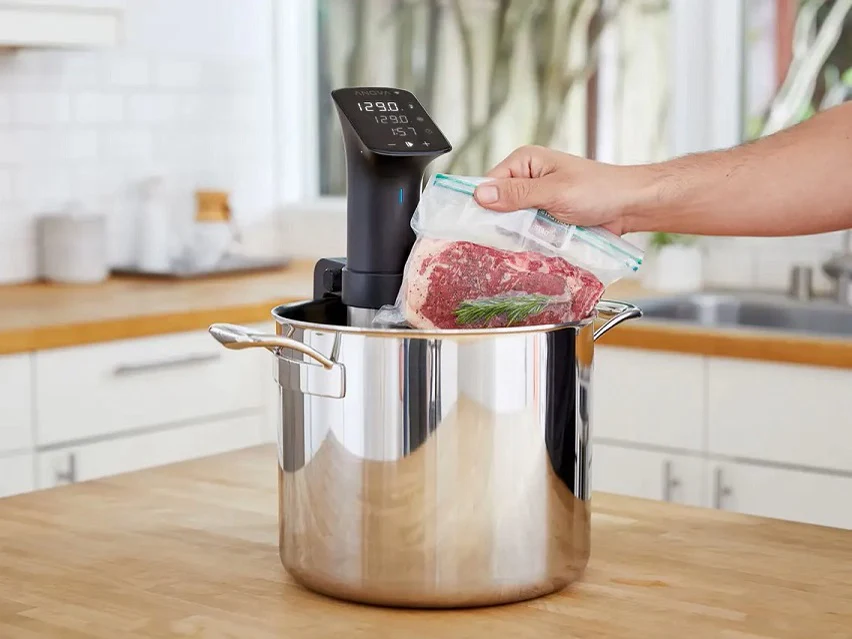
If you bought a sous vide machine five years ago, it was essentially a “dumb” heating stick. You clipped it to a pot, set the temperature to 130°F, and dropped your vacuum-sealed steak into the water.
It was revolutionary because the water could never exceed 130°F, meaning your steak could physically never overcook past medium-rare.
However, Sous Vide 1.0 still had a massive human-error component: Time. You had to consult giant internet charts to figure out how long to cook things. A 1-inch steak took an hour. A 2-inch steak took three hours. If you guessed the thickness wrong, the center was raw. If you left a chicken breast in too long, the texture turned to mush. It was precise in temperature, but clumsy in application.
Sous Vide 2.0: The AI Upgrade
Today’s AI kitchen gadgets have solved the time problem by replacing manual charts with advanced algorithms. The new devices don’t just heat water; they calculate.
Visual Doneness Algorithms
With apps connected to modern devices like the Breville Joule, you no longer set a temperature. You use the “Visual Doneness” feature. You look at pictures of steak on your phone from bloody rare to well done. You tap the exact shade of pink you want. The AI instantly calculates the exact decimal temperature required to achieve that color based on the specific type of meat.
Turbo/Predictive Cooking
The biggest leap in AI precision cooking is algorithmic speed. Traditional sous vide took hours because the water was set exactly to the target temperature.
New AI models use “Turbo” or dynamic heating. The AI knows the thermal conductivity of the meat. It starts the water bath much hotter than the target temperature to push heat into the center of the meat rapidly, and then precisely drops the temperature at the exact second the core is about to overshoot. This cuts traditional sous vide cooking times in half without sacrificing the edge-to-edge perfection.
Beyond the Water: Wireless AI Meat Probes
Sous vide is incredible, but nobody wants to vacuum seal their food every single night. What if you just want to grill a turkey or roast a pork loin in your oven?
This is where AI has made its biggest jump into the mainstream kitchen: the wireless smart thermometer.
Devices like the Meater Plus or Combustion Inc. probe look like simple metal sticks, but they are packed with internal and ambient temperature sensors.
The Problem of “Carryover Cooking”
When you take a hot turkey out of the oven, the residual heat inside the bird continues to cook the meat for another 20 minutes on the counter. This is called “carryover cooking,” and it is the #1 reason people ruin Thanksgiving. They take the bird out when the thermometer says 165°F, but the carryover heat pushes it to a dry 175°F.
The AI Solution
Wireless smart probes use predictive AI to solve this. The probe monitors the ambient heat of your smart oven and the internal heat of the meat.
- The AI calculates the unique cooking curve of your specific roast.
- It factors in the ambient temperature of your kitchen.
- It sends an alert to your phone: “Pull the meat off the heat NOW at 155°F. It will rest on the counter and peak exactly at 165°F in 12 minutes.”
It literally predicts the future of your food’s thermodynamics.
“Dry Sous Vide”: The Smart Oven Revolution
The logical endgame of this technology is combining precision temperature control with the ability to actually sear and brown food.
Enter the modern smart oven (like the Anova Precision Oven or June). These appliances offer “dry sous vide” by using steam and computer-controlled heating elements.
Instead of putting your steak in a plastic bag, you put the naked steak directly into the smart oven. The oven floods the chamber with 100% steam to replicate the water bath, holding the steak at an exact 130°F. Then, for the last two minutes, the AI vents the steam and blasts the meat with a 500°F broiler to create a perfectly crispy crust.
You get the perfection of sous vide with the flavor of an open grill, all fully automated.
Why the SF Food Scene is Obsessed
San Francisco has always had a high standard for food, driven by access to incredible local produce and world-class chefs. But not everyone has 10,000 hours to master the grill.
AI-powered precision cooking democratizes the Michelin-star experience. It bridges the gap between home cooks and professionals. When you remove the fear of failure, you become more adventurous. You start buying expensive cuts of wagyu or trying difficult recipes like duck breast, because you know the AI guarantees you won’t ruin a $50 piece of meat.
What Should You Buy? A Buyer’s Checklist
If you are ready to upgrade your kitchen, here is where to start based on your cooking style:
- For the Apartment Griller: Buy a Wireless AI Meat Probe (e.g., Meater 2 Plus). It works in any oven, pan, or outdoor grill. It is the cheapest entry point (~$100) into precision cooking.
- For the Meal-Prepper: Buy an AI Sous Vide Stick (e.g., Breville Joule). You can cook 10 chicken breasts perfectly on Sunday and keep them in the fridge for the week.
- For the Ultimate Tech Foodie: Buy a Combi Smart Oven (e.g., Anova Precision Oven). At around $700, it replaces almost every heating appliance in your kitchen with pure steam-powered AI perfection.
The Verdict
Cooking is supposed to be enjoyable. Staring at a clock and worrying about dry chicken is not enjoyable.
AI-powered precision cooking is not cheating; it is evolving. Just as we use GPS instead of paper maps to ensure we get to our destination, we use AI algorithms to ensure our food hits the exact temperature every single time.
Sous Vide 2.0 has arrived, and it means you never have to eat a dry piece of meat again.
Other blogs
Fridge Freezing Food? Here’s Why and How to Fix It
A fridge freezing food is almost always fixable — and rarely means a major repair. This guide covers every common…
Read More →Slow Cooker to Dutch Oven Conversion: The Full Guide
Converting a slow cooker recipe to a Dutch oven comes down to three adjustments: cut the cook time to about…
Read More →Air Fryer vs Convection Oven: Are They the Same Thing?
Here’s the question that quietly drives a lot of kitchen appliance confusion: is an air fryer just a convection oven?…
Read More →Induction vs Gas: The Truth Most Guides Won’t Tell You
The induction vs gas debate has become strangely tribal. Gas devotees talk about flame control and the feel of real…
Read More →