

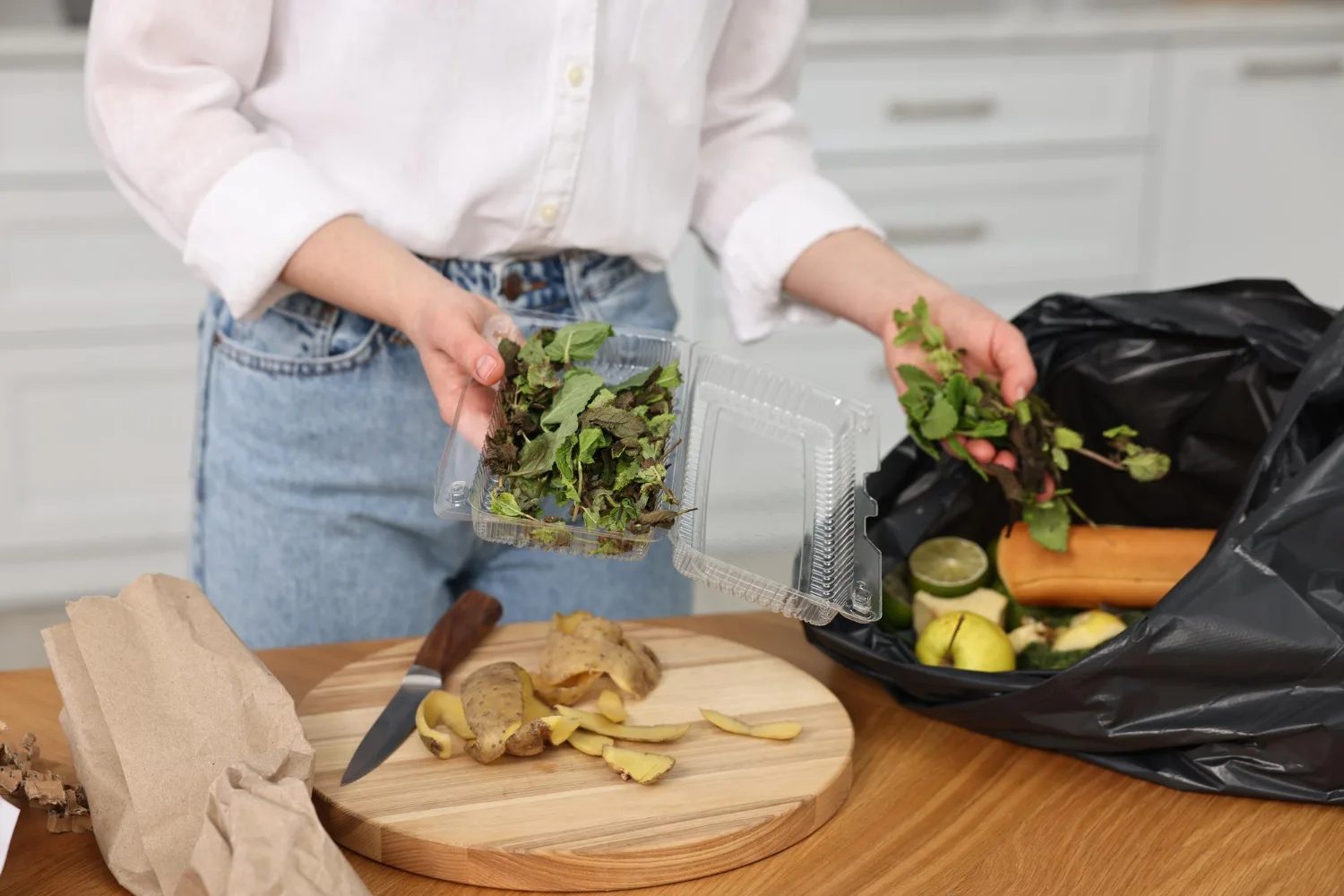
We have all experienced the guilt. You open the crisper drawer in your refrigerator, reach past the fresh groceries you just bought, and find a bag of spinach you bought two weeks ago. It is no longer food; it is a bag of green slime. Into the trash bin it goes.
If you live in the San Francisco Bay Area, sustainability is likely a big part of your daily life. We compost, we carry canvas tote bags, and we drive electric cars. Yet, according to the USDA, the average American household still throws away an astonishing 30% to 40% of the food they purchase. That equates to roughly $1,500 burned every single year per family.
For a long time, the advice to fix this was behavioral: “Just plan better,” or “Check your fridge before you shop.” But human habits are hard to break.
This is where Artificial Intelligence steps in. AI does not rely on your willpower; it relies on data. By leveraging AI kitchen gadgets, predictive algorithms, and smart hardware, we can finally tackle the food waste crisis at the source. Here is how you can use the latest food tech to cut your kitchen waste in half.
1. The Root Cause: Aspirational Buying vs. Reality
Why do we waste so much food? It usually starts with good intentions. You go to the grocery store on a Sunday feeling ambitious. You buy kale, fresh herbs, and exotic vegetables because you want to be the person who cooks healthy meals every night.
But by Wednesday, work gets stressful, you are exhausted, and you order Thai food. The kale rots.
This mismatch between our intentions and our actual energy levels is the root cause of food waste. Technology fixes this by removing the optimism and replacing it with data-driven AI meal planning.

2. Phase One: Stop Overbuying with AI Meal Planning
The easiest way to reduce waste is to simply bring less excess food into your house.
Traditional meal planning required you to guess how much food you would eat. AI meal planning apps (like Mealime or Samsung Food) use algorithms to calculate exact quantities based on your schedule and eating habits.
The “Zero-Waste” Algorithm
When an AI builds your weekly menu, it looks for ingredient overlap.
- The Old Way: You buy a whole bunch of cilantro for Tuesday’s tacos. You use 10% of it. The rest rots.
- The AI Way: The AI recognizes you need cilantro for Tuesday. It automatically selects a Thai Curry recipe for Thursday that uses the exact remaining amount of cilantro.
By the end of the week, your fridge is practically empty because every ingredient had a mathematical destination. This predictive modeling alone can reduce household grocery waste by up to 35%.

3. Phase Two: The “Pantry Chef” AI Recipe Generator
Even with the best planning, you will end up with random odds and ends. Half an onion, a single zucchini, some leftover chicken, and a jar of capers.
In the pre-AI era, these items would sit in the fridge until they spoiled because you didn’t know what to do with them. Today, this is the perfect job for an AI recipe generator.
Using apps like ChatGPT, ChefGPT, or SuperCook, you can practice “Pantry-First Cooking.”
- Open your fridge and list the 4 or 5 random items you have.
- Type them into the AI prompt: “I have half an onion, one zucchini, chicken breast, and white rice. Give me a 20-minute dinner recipe using only these ingredients and basic spices.”
- The AI instantly generates a customized stir-fry or casserole.
You just turned what would have been garbage into a gourmet Tuesday night dinner. This single habit stops the “leftover leakage” that plagues most kitchens.

4. Phase Three: The Role of Smart Kitchen Appliances
Software is powerful, but hardware is where the real magic happens. Smart kitchen appliances are now equipped with sensors designed specifically to extend the life of your food.
The Watchdog: AI Refrigerators
Modern smart fridges use internal cameras and computer vision to track exactly what is inside. When you put a carton of strawberries on the shelf, the fridge logs it and assigns a countdown timer based on average spoilage rates. Three days before the berries mold, your fridge sends an alert to your phone to eat them.
Perfect Execution: The Smart Oven
Food waste isn’t just about spoilage; it is also about human error. How many times have you thrown away a tray of burnt cookies or a dried-out, overcooked chicken breast?
A smart oven eliminates cooking errors. Using internal cameras, these ovens recognize the food you put inside and automatically control the heat. You physically cannot burn your food because the AI turns off the heat the exact second the internal temperature reaches perfection. Less ruined food equals less waste.
5. Phase Four: The Post-Waste Solution (Smart Composting)
Even if you optimize your buying and cooking, you will still have unavoidable waste like banana peels, eggshells, and chicken bones. In San Francisco, composting is mandatory, but traditional countertop compost bins attract fruit flies and smell terrible.
Enter AI kitchen gadgets like the Mill or Lomi. These are “smart bins” that sit in your kitchen.
- You scrape your plate directly into the bin.
- Overnight, the bin uses AI-regulated heat and grinding mechanisms to dehydrate the food.
- By morning, your smelly wet garbage has been transformed into dry, odorless grounds.
Depending on the service, these grounds can be used as nutrient-rich plant food or mailed back to farms to be used as chicken feed. You are keeping methane-producing food out of landfills effortlessly.
The Economics of AI Sustainability
Reducing food waste is often framed as a moral obligation for the planet. But it is also a massive financial win for your wallet.
Here is what the savings look like when you implement a full AI kitchen strategy:
| AI Strategy | Action | Estimated Annual Savings |
| AI Meal Planning | Eliminates duplicate buying and unused bulk items. | ~$500 |
| AI Recipe Generator | Uses up leftovers instead of ordering takeout. | ~$600 |
| Smart Fridge Tracking | Prevents produce from expiring unnoticed. | ~$300 |
| Smart Oven Precision | Eliminates ruined/burnt meals. | ~$100 |
| Total Potential Savings | $1,500 / year |
How to Start Today
You do not need a $3,000 smart fridge to cut your food waste in half. You can start today with zero financial investment.
- Download a Free App: Put Whisk (Samsung Food) or Mealime on your phone tonight. Plan your next three days of meals using their algorithms.
- Commit to One “Pantry Night” a Week: Pick Thursday night as your AI recipe generator night. No buying new food allowed. You must ask an AI to create a dinner from what is already in your house.
- Download Too Good To Go: This isn’t for cooking, but it’s a brilliant SF-based app. It connects you with local bakeries and restaurants selling their surplus food at the end of the day for 70% off. You save food from the dumpster and get a cheap meal.
Technology has given us the tools to fix a massive environmental problem. By letting AI do the counting, tracking, and guessing, we can finally align our good intentions with our actual habits.
Other blogs
Fridge Freezing Food? Here’s Why and How to Fix It
A fridge freezing food is almost always fixable — and rarely means a major repair. This guide covers every common…
Read More →Slow Cooker to Dutch Oven Conversion: The Full Guide
Converting a slow cooker recipe to a Dutch oven comes down to three adjustments: cut the cook time to about…
Read More →Air Fryer vs Convection Oven: Are They the Same Thing?
Here’s the question that quietly drives a lot of kitchen appliance confusion: is an air fryer just a convection oven?…
Read More →Induction vs Gas: The Truth Most Guides Won’t Tell You
The induction vs gas debate has become strangely tribal. Gas devotees talk about flame control and the feel of real…
Read More →