


When we talk about Artificial Intelligence in San Francisco, the conversation usually goes to dramatic extremes. We think of self-driving Waymo cars navigating the hills of Pacific Heights, or humanoid robots, or ChatGPT writing entire screenplays.
Because of this, many people assume their kitchens are completely free of AI. After all, your toaster doesn’t talk to you, and your blender doesn’t have a screen.
But you would be wrong.
The most successful technology is the kind that becomes invisible. Right now, there are millions of micro-algorithms and machine learning models operating silently in the background of everyday smart kitchen appliances. They are saving you electricity, preventing your food from burning, and making your morning coffee taste better without you ever pushing an “AI” button.
Here are the hidden AI features currently working in your kitchen that you probably didn’t know existed.

1. The Stalker in Your Refrigerator (Adaptive Defrost)
You probably think your refrigerator just blows cold air 24/7. In reality, a modern smart fridge is actively studying your family’s behavior.
Older fridges used mechanical timers to run energy-draining “defrost cycles” at random intervals. Modern AI kitchen gadgets use behavioral algorithms. The AI tracks exactly when you open the fridge door, how long you stand there looking for a snack, and the ambient temperature of your kitchen.
- The Hidden Feature: The AI learns your schedule. It knows that the house goes to sleep at 11:00 PM and nobody opens the fridge until 6:30 AM. It actively delays its defrost cycles and shifts its cooling power to match your sleep schedule.
- The Result: You save significant money on your SF utility bill, and the appliance extends its own lifespan by reducing mechanical wear and tear.

2. The Ear Inside Your Dishwasher (Acoustic Sensors)
Have you ever wondered what the “Auto” or “Smart Wash” button on your new dishwasher actually does? It is not just a generic timer. It is an AI-driven sensory system.
High-end dishwashers (from brands like Bosch and LG) now use turbidity sensors (which measure how cloudy the water is) combined with acoustic AI.
- The Hidden Feature: The dishwasher literally listens to the water hitting your dishes. By analyzing the sound waves of the water bouncing off the plates, combined with the dirtiness of the runoff water, the AI calculates the exact soil level of your load.
- The Result: If you just have coffee mugs, the AI ends the cycle in 40 minutes and uses minimal water. If you have plates caked in dried lasagna, the AI increases the water pressure and extends the cycle. It customizes the wash in real-time.

3. The Coffee Oracle (Micro-Calibration)
If you own a high-end automated espresso machine (like a De’Longhi or Breville), there is a high probability that machine learning is pulling your morning shot.
Coffee beans are organic and highly volatile. A bag of beans bought on Monday will lose moisture by Friday. Traditional machines don’t account for this, resulting in bitter coffee by the end of the week.
- The Hidden Feature: Hidden extraction algorithms monitor the flow rate of the espresso. If the AI senses the water is pushing through the coffee puck too fast (meaning the beans are stale and dry), it automatically micro-adjusts the burr grinder to grind the beans slightly finer for the next cup.
- The Result: The machine course-corrects without telling you, ensuring you get the exact same perfect layer of crema on day seven as you did on day one.
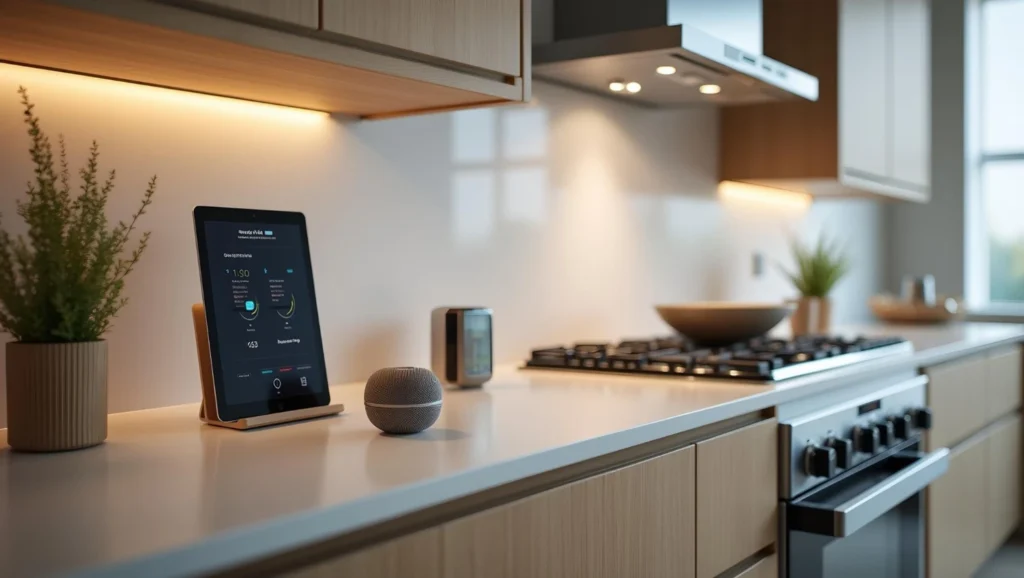
4. The “Sensor Cook” Button on Your Smart Oven
We covered the incredible computer-vision capabilities of the newest smart ovens in our previous guides. But what about that humble “Sensor Reheat” button on your combination microwave-oven?
- The Hidden Feature: When you put a bowl of leftover pasta in and press “Sensor Reheat,” the appliance doesn’t just guess a time. It turns on a humidity sensor. As the food heats up, it releases steam. The AI measures the exact rate of humidity rising from the food. When the algorithm detects the exact vapor peak that indicates the center of the food has reached serving temperature, it shuts off the heat.
- The Result: No more lava-hot plates with ice-cold food in the middle.

5. The Silent Nutritionist in Your Recipe Apps
If you use any modern recipe app or digital grocery list, you are using AI, even if the app doesn’t advertise it.
- The Hidden Feature: Natural Language Processing (NLP). When you import a recipe from a random food blogger’s website into your app, the software doesn’t just copy-paste the text. A hidden AI recipe generator “reads” the recipe, understands that “1 cup of heavy cream” is a dairy fat, matches it with standard nutritional databases, and calculates the exact calories and macros for the entire dish instantly.
- The Connection to AI Meal Planning: This hidden data tagging is what allows your AI meal planning app to warn you that your weekly menu is too high in sodium, or instantly generate a shopping list sorted by grocery aisle.
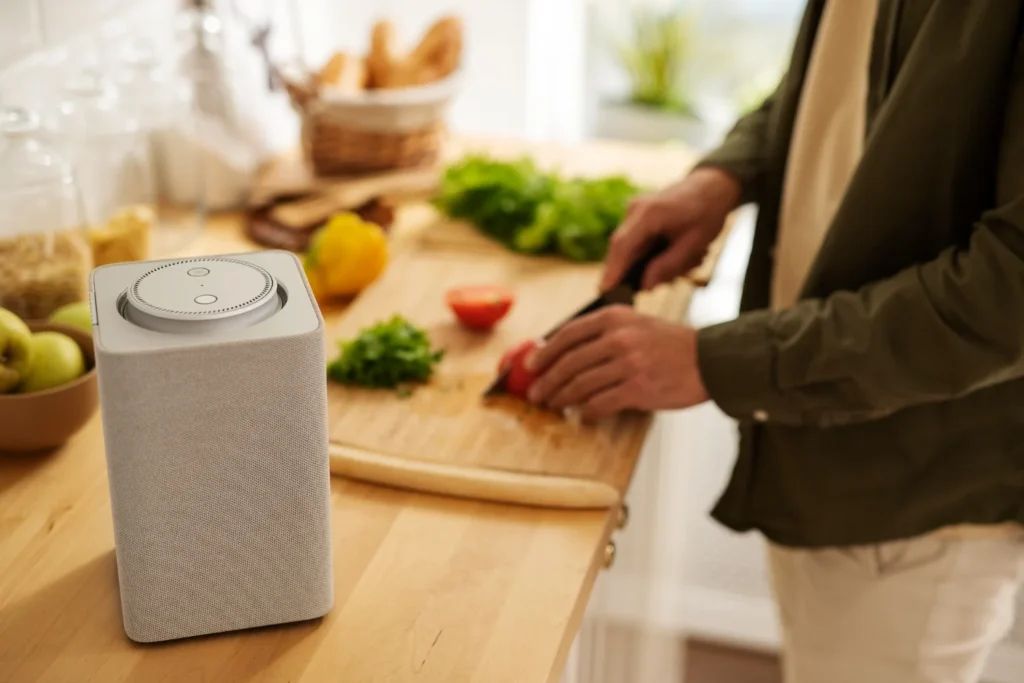
6. Smart Voice Assistants: The Kitchen Math Geniuses
You likely use Alexa, Google Assistant, or Siri in the kitchen to set timers. (“Alexa, set a timer for 10 minutes.”) But the hidden AI capabilities of these voice assistants in a culinary context are vastly underutilized.
- The Hidden Feature: Contextual Kitchen Math. You don’t need to ask standard conversion questions. You can ask complex, situational questions. For example: “Hey Google, I have a recipe that calls for 3 eggs to make 12 pancakes, but I only have 2 eggs. How much flour do I need now?” * The Result: The AI scales the entire recipe instantly, saving you from doing fractions with flour on your hands.
The Verdict: The Invisible Chef
The takeaway from these hidden features is simple: the future of kitchen tech isn’t necessarily about adding more screens to our appliances.
The ultimate goal of food tech is “Invisible AI.” The best technology is the kind that removes friction from your life without demanding your attention. It is the dishwasher that knows how dirty your plates are. It is the oven that knows when your food is done.
If you have upgraded any of your kitchen appliances in the last five years, congratulations. You are already cooking with Artificial Intelligence.
Other blogs
Fridge Freezing Food? Here’s Why and How to Fix It
A fridge freezing food is almost always fixable — and rarely means a major repair. This guide covers every common…
Read More →Slow Cooker to Dutch Oven Conversion: The Full Guide
Converting a slow cooker recipe to a Dutch oven comes down to three adjustments: cut the cook time to about…
Read More →Air Fryer vs Convection Oven: Are They the Same Thing?
Here’s the question that quietly drives a lot of kitchen appliance confusion: is an air fryer just a convection oven?…
Read More →Induction vs Gas: The Truth Most Guides Won’t Tell You
The induction vs gas debate has become strangely tribal. Gas devotees talk about flame control and the feel of real…
Read More →