

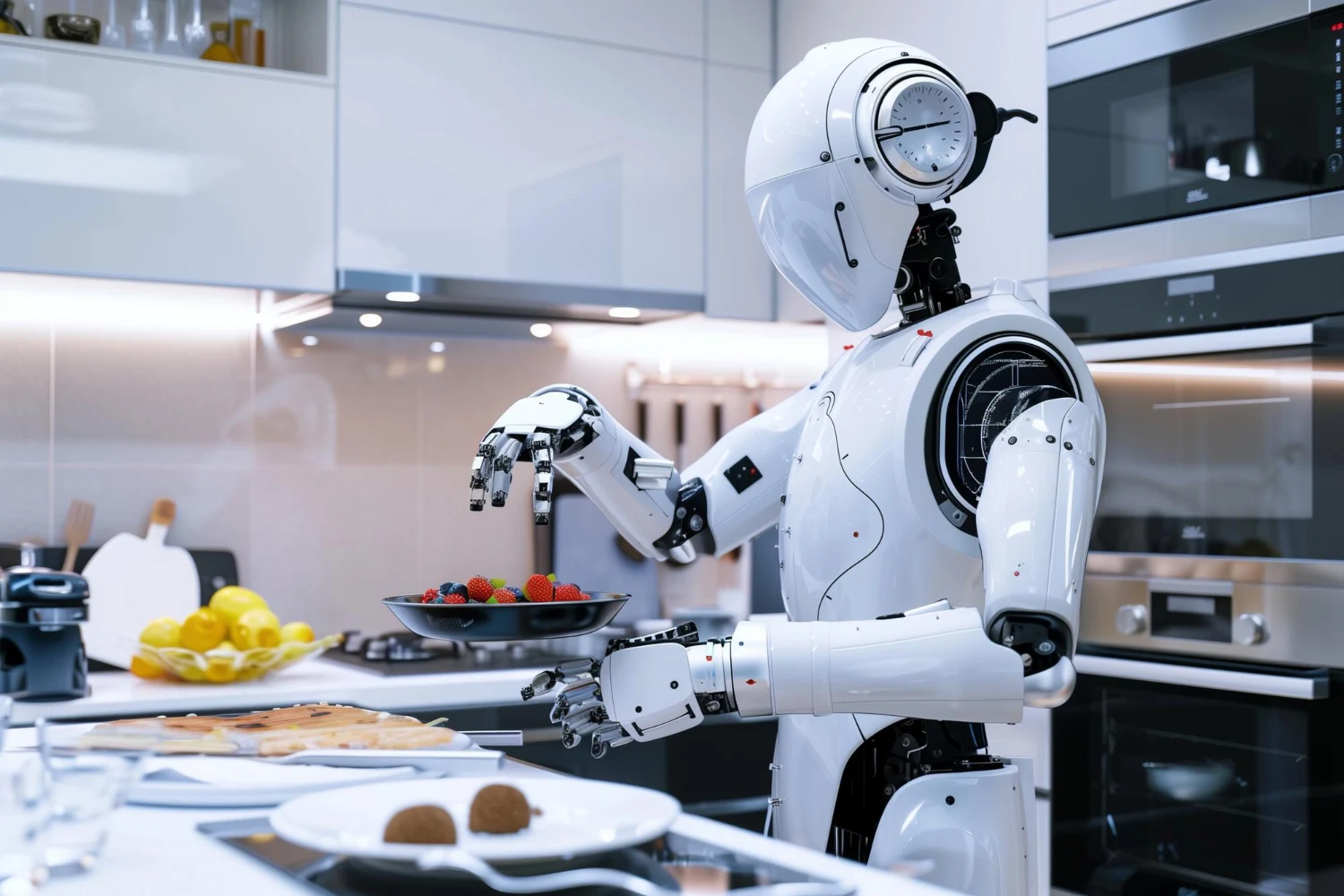
For the last seventy years, pop culture has made us a very specific promise: the robotic butler. We grew up watching The Jetsons and sci-fi movies where a friendly humanoid robot wearing a metal apron served perfectly cooked pancakes to the family.
Here in San Francisco, the global capital of robotics and AI, that promise feels agonizingly close. We have self-driving cars navigating the hills of Nob Hill. We have AI writing our emails. We have smart kitchen appliances that use computer vision to recognize a salmon filet.
So, where is the robot chef? Why am I still chopping my own onions?
The reality of kitchen robotics is a fascinating mix of incredible breakthroughs and frustrating limitations. While we aren’t quite at the “Jetsons” stage, the restaurant industry is quietly undergoing an automated revolution. Here is the real answer to when robot chefs will actually work, what they can do right now, and when one might finally show up in your home kitchen.
1. The Science Problem: Why the Kitchen is a Nightmare for Robots
In the world of AI, there is a concept called Moravec’s Paradox. It states that high-level reasoning (like playing chess or passing the bar exam) requires very little computation for a computer, but low-level sensorimotor skills (like walking or folding a towel) are incredibly difficult.
The kitchen is the ultimate test of Moravec’s Paradox.
For a human, making a salad is easy. For a robot, it is an engineering nightmare.
- A tomato is soft, slippery, and asymmetric. A robotic claw needs to grip it hard enough so it doesn’t drop, but gently enough so it doesn’t crush it.
- Onions make your eyes water, but they also release sticky juice that ruins sensors.
- Water boils, grease splatters, and knives slip.
For a robot to be a true “generalist” chef, it needs tactile sensitivity that rivals human skin and AI spatial awareness that can predict physics. We have the AI brains; we are still catching up on the mechanical hands.
2. The Success Stories: The Rise of the “Specialists”
While we don’t have a robot that can cook everything, San Francisco is currently filled with robots that can cook one thing perfectly. The industry has shifted away from humanoid robots and toward hyper-specialized automation.
If you eat out in the Bay Area today, you will likely encounter these three robotic workers:
Flippy (The Fry Cook)
Created by Miso Robotics, “Flippy” is a robotic arm mounted on a rail system over deep fryers. It uses thermal vision to monitor the fry vats. It grabs a basket of fries, submerges it, shakes off the excess grease at the exact right moment, and dumps them into the warming tray. It is impervious to grease burns and never calls in sick. It is currently being rolled out in major fast-food chains.
The Pizza Bot (Picnic)
Pizza assembly is repetitive, making it perfect for robots. Automated systems like Picnic use a conveyor belt system where AI sensors detect the size of the dough. The machine then dispenses sauce, cheese, and pepperoni with millimeter precision as the dough moves beneath it, producing hundreds of identical pizzas per hour.
Cafe X (The SF Barista)
Located right here in SF (and at SFO airport), Cafe X features a sleek, six-axis industrial robot arm behind a glass window. It doesn’t look like a human at all. It grabs cups, steams milk to an exact micro-foam consistency, pulls the espresso shot, and waves to the customer. It takes the guesswork out of your morning latte.
3. The Holy Grail: The Home “Dexterous” Chef
So, commercial kitchens have specialized conveyor belts. But what about the robot that cooks you dinner at home?
The closest we have come to the ultimate consumer robot chef is the system developed by Moley Robotics. This is not a single appliance; it is a full robotic kitchen.
Two incredibly advanced robotic arms hang from the ceiling over your stove. These arms feature fully articulated hands with sensors in the fingertips.
- How it learns: Moley motion-captured the movements of a BBC MasterChef winner. The robot records the chef’s exact hand movements, timing, and stirring angles.
- How it works: You put the pre-measured ingredients into special containers, tap a screen, and the arms come to life. They turn on the stove, pour the oil, stir the pot, and plate the food with human-like grace.
The catch? It costs over $300,000, requires a custom-built kitchen, and you still have to wash the dishes. For now, it remains a luxury toy for the ultra-wealthy.
4. Why SF Restaurants Need Robots (The Labor Crisis)
To understand why billions of dollars are being poured into AI kitchen gadgets, you have to look at the San Francisco labor market.
Running a restaurant in SF is brutally expensive. Rents are astronomical, and finding line cooks who can afford to live in the Bay Area on restaurant wages is nearly impossible. Turnover in the food service industry is over 70%.
Robots are the economic solution. A system like Flippy costs around $3,000 per month to lease. In San Francisco, paying a human fry cook $20/hour for two shifts a day costs a restaurant over $10,000 a month. The robot cuts labor costs by 70%, operates at a 100% consistency rate, and frees up human workers to focus on hospitality and complex food prep.
5. The Verdict: When Will You Get One?
If you are waiting for a robot with a face to walk into your kitchen and scramble your eggs, you will be waiting until at least the 2030s. The hardware for general-purpose humanoid robotics is simply too expensive for the average consumer.
But the robot chef is already in your house it’s just invisible.
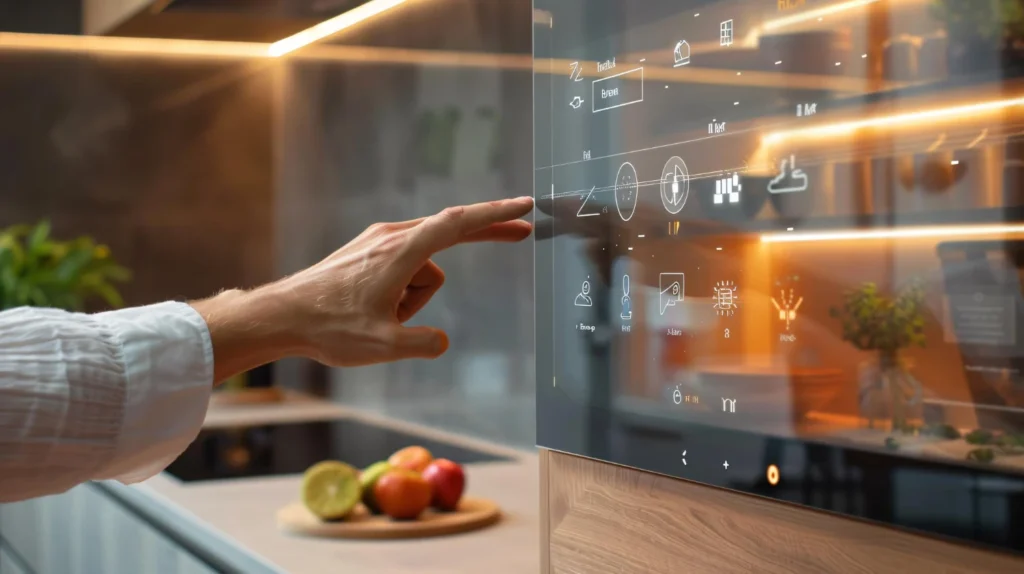
The future of home cooking isn’t a robot holding a spatula. It is the smart oven that uses internal cameras to recognize a chicken breast and adjust the heat automatically. It is the smart blender that senses the density of your smoothie and adjusts blade speed. It is the AI recipe generator that tells you exactly how much salt to add.
We won’t buy “robot chefs.” We will buy intelligent environments.
In the next five years, the kitchen itself will become the robot. It will measure, heat, stir, and chill with absolute precision, leaving us with the best part of cooking: eating.
Other blogs
Fridge Freezing Food? Here’s Why and How to Fix It
A fridge freezing food is almost always fixable — and rarely means a major repair. This guide covers every common…
Read More →Slow Cooker to Dutch Oven Conversion: The Full Guide
Converting a slow cooker recipe to a Dutch oven comes down to three adjustments: cut the cook time to about…
Read More →Air Fryer vs Convection Oven: Are They the Same Thing?
Here’s the question that quietly drives a lot of kitchen appliance confusion: is an air fryer just a convection oven?…
Read More →Induction vs Gas: The Truth Most Guides Won’t Tell You
The induction vs gas debate has become strangely tribal. Gas devotees talk about flame control and the feel of real…
Read More →